 (954) 249-2314
- Sort by Featured
- Sort by Best Selling
- Sort by Alphabetically, A-Z
- Sort by Alphabetically, Z-A
- Sort by Price, low to high
- Sort by Price, high to low
- Sort by Date, new to old
- Sort by Date, old to new
Tri Fuel Portable Generators
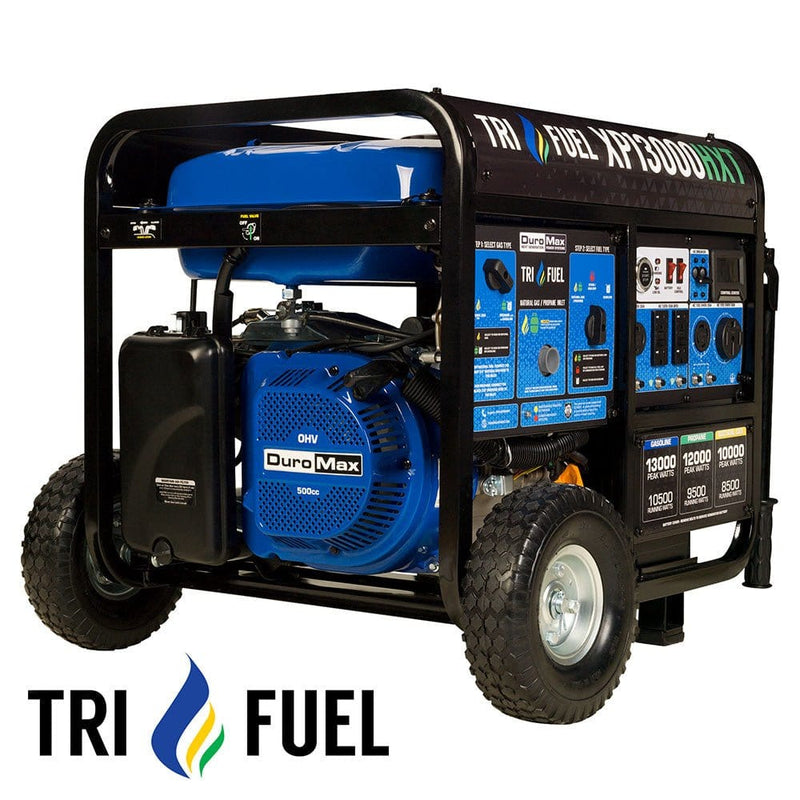


Tri Fuel Portable Generators for On-the-Move Power
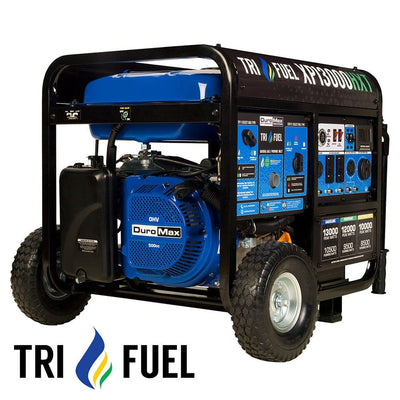
A tri fuel portable generator gives you the same three-fuel flexibility, gasoline, propane, and natural gas, as a stationary tri fuel unit, but built into a frame designed to be moved between locations rather than installed permanently. This DuroMax lineup covers the XP13000HXT, XP15000HXT+, and XP11000iHT, spanning 11,000 to 15,000 watts depending on the model, all while keeping the fuel independence that matters most when a single supply source becomes unreliable.
Comparing the XP13000HXT, XP15000HXT+, and XP11000iHT
The XP13000HXT delivers 13,000 watts using a standard engine setup, a solid choice for buyers prioritizing output and value without needing inverter-clean power. The XP15000HXT+ steps up to 15,000 watts and adds EFI (electronic fuel injection), which improves cold-weather starting reliability and reduces the fuel system issues that come with a standard carburetor sitting unused between uses. The XP11000iHT trades some peak wattage for inverter technology, producing cleaner, more stable power suited to running sensitive electronics safely alongside standard appliances.
Why Portability Matters for Tri Fuel Buyers
Unlike a permanently installed standby system, a tri fuel portable generator can be moved between a home, a job site, or wherever backup power is needed most at a given moment. That flexibility comes with a tradeoff: these units still require manual setup and starting rather than the automatic operation of a standby system, and at 11,000 to 15,000 watts they're substantial enough that moving them comfortably generally benefits from built-in wheels, which all three models in this collection include as part of their frame design.
Frequently Asked Questions
Can I use one of these units for both home backup and job site work?
EFI, or electronic fuel injection, replaces the standard carburetor with an electronically managed fuel delivery system, which generally improves starting reliability in cold weather and reduces the maintenance issues that come from gasoline sitting in a carburetor between uses. The XP13000HXT uses a standard carbureted setup, which is simpler and typically costs less, but may require more attention to fuel system maintenance if the unit sits unused for extended periods between uses.
Should I choose the inverter XP11000iHT over the higher-wattage XP13000HXT or XP15000HXT+?
If you're running sensitive electronics, laptops, medical equipment, modern appliances with digital control boards, the cleaner power from the XP11000iHT's inverter technology reduces the risk of damage that rougher, non-inverter power can sometimes cause. If your priority is maximum available wattage for running larger equipment or more simultaneous appliances, the higher-output XP13000HXT or XP15000HXT+ may be the better fit, since inverter technology in this lineup comes with somewhat lower peak output than the non-inverter models.
What does EFI actually add to the XP15000HXT+ compared to the XP13000HXT?
Yes, that dual-purpose flexibility is part of what makes a tri fuel portable generator appealing over a fixed standby system, since the same unit can cover home backup during a storm and then move to a job site for construction or contractor work between outages. The tradeoff compared to a dedicated standby generator is that you'll need to manually transport, connect, and start the unit each time, rather than having it switch on automatically wherever it's permanently installed.