 (954) 249-2314
- Sort by Featured
- Sort by Best Selling
- Sort by Alphabetically, A-Z
- Sort by Alphabetically, Z-A
- Sort by Price, low to high
- Sort by Price, high to low
- Sort by Date, new to old
- Sort by Date, old to new
Renogy



Renogy Solar Kits, LiFePO4 Batteries & Solar Panels for RV and Off-Grid Power
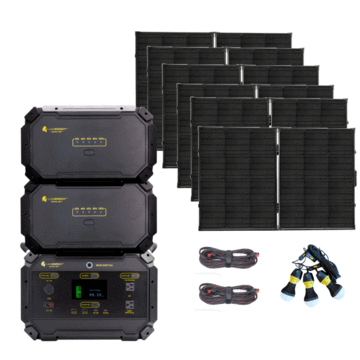
Renogy gives RV owners, campers, cabin owners, and off-grid builders a practical way to put together dependable solar power without guessing which major components belong in the system. This collection brings together complete Renogy solar kits, high-capacity RV power solutions, smart LiFePO4 batteries, N-type bifacial solar panels, and inverter-charger equipment for both new installations and system upgrades.
Some customers want a complete package they can install as one project. Others already have part of a system and only need more battery storage, additional solar input, or a properly sized inverter charger. We carry both options. The important part is choosing equipment around the power you actually use—not simply buying the largest kit on the page.
Complete Renogy RV Solar Kits and Power Solutions
For a new RV, van, trailer, tiny home, or remote cabin system, a complete Renogy kit is usually the cleanest place to start. These packages group compatible solar panels, energy storage, charging equipment, and system hardware so there are fewer loose ends during installation. Our current lineup includes compact systems for lighter daily loads as well as larger RV solutions with several kilowatt-hours of battery capacity for extended travel and off-grid living.
A smaller system can be a good fit for lighting, electronics, fans, water pumps, and everyday 12-volt loads. Larger Renogy RV solutions make more sense when the system also needs to support refrigeration, kitchen appliances, computers, longer stays without hookups, or heavier overnight use. If you are not sure which size fits, start by listing the appliances you expect to run, their wattage, and how many hours each one operates in a typical day.
Renogy LiFePO4 Batteries for Reliable 12-Volt Storage
Renogy lithium iron phosphate batteries are built for customers who want more usable energy, lower weight, and longer service life than a traditional lead-acid battery bank. The collection includes compact high-capacity CORE batteries and smart PRO models with features such as Bluetooth monitoring and self-heating on selected versions.
Cold-weather protection deserves special attention. A battery with low-temperature charging protection can stop charging when conditions are unsafe, while a self-heating model is designed to warm the battery before charging when the required conditions are met. Those features are useful for winter RV travel, mountain cabins, and equipment stored where temperatures regularly fall below freezing. Always match the battery bank voltage, charging profile, and current requirements to the rest of the system.
N-Type Bifacial Solar Panels and Inverter Chargers
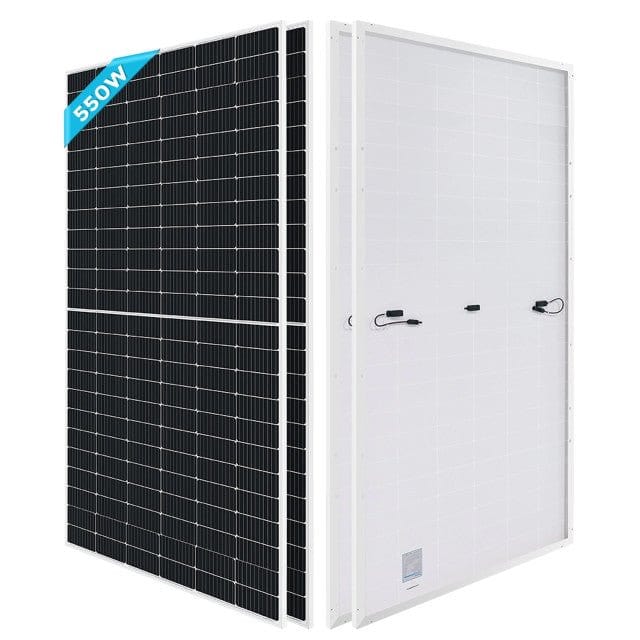
Renogy's N-type bifacial panels are a strong option when you want higher total solar collection from the available mounting area. In addition to producing power from direct sunlight on the front, a bifacial panel can collect reflected light on the rear when it is installed over a bright or reflective surface with adequate clearance. Actual output still depends on sun angle, temperature, shading, mounting height, and the surface beneath the array.
For larger builds, the inverter charger is just as important as the panels. It determines how much AC equipment can run at one time and how the battery bank is charged from available AC power. Before choosing an inverter, check the continuous wattage of your expected loads, the startup surge of motors and compressors, and the battery-bank voltage. A well-balanced system is usually more reliable than one with oversized solar panels but undersized storage or conversion equipment.
Best Uses for Renogy Solar Equipment
- RV, fifth-wheel, travel trailer, and camper electrical systems
- Van conversions and mobile work vehicles
- Off-grid cabins, sheds, workshops, and tiny homes
- Battery-bank upgrades for longer runtime between charges
- Fixed solar arrays using high-output monocrystalline or bifacial panels
- Backup power systems for essential appliances and electronics
Frequently Asked Questions
Which Renogy solar kit is best for an RV?
The right kit depends on daily energy use, available roof space, and how long you expect to camp without shore power. A smaller system may cover lights, device charging, fans, and basic 12-volt loads. Refrigeration, cooking appliances, air conditioning, and long off-grid stays require substantially more solar input, battery capacity, and inverter output. Build from a realistic appliance list rather than choosing only by panel wattage.
Should I buy a complete Renogy kit or separate components?
A complete kit is usually easier for a new installation because the major parts are selected to work together. Separate components make more sense when you are expanding an existing system, replacing one piece, or building around equipment you already own. Check voltage, connector type, charge-controller limits, and battery compatibility before mixing components.
Are bifacial solar panels better than standard panels?
Bifacial panels can produce additional energy from reflected light reaching the rear of the panel, but the gain depends heavily on the installation. They work best with open rear clearance and a reflective surface. On a mounting surface where the back is blocked or heavily shaded, the advantage may be smaller.
How much Renogy battery capacity do I need?
Add the watt-hours used by your essential devices during a normal day, then include a reasonable reserve for cloudy weather, inverter losses, and unexpected use. Battery capacity controls runtime; inverter wattage controls how much equipment can operate at once. Both numbers matter, and one cannot make up for an undersized value in the other.
Can Renogy lithium batteries charge in freezing weather?
That depends on the exact battery. Selected Renogy batteries include low-temperature charging protection, self-heating, or both. Review the specifications for the model you are considering and never assume that every lithium battery can safely accept a charge below freezing.
Need help sorting out the panel wattage, battery capacity, or inverter size? Contact AllProGenerators.com before ordering. We can help you compare the Renogy options in this collection and narrow the system down to the way you actually plan to use it.