 (954) 249-2314
Best Budget Solar Generator: What to Check Before You Buy
If you need to keep the fridge cold and the lights on through an outage without spending thousands, you don't need a whole-home system. As of 2026, our favorite budget solar generator is the OSCAL PowerMax 2400 at $789, with 2,400Wh of storage for about 33 cents per watt-hour. Our second choice is the PECRON E3600LFP, and our honorable mention, if you want to add a battery later, is the Anker SOLIX F3000.
Before you pick one, though, check that it can start your biggest appliance and that you can recharge it in the sun you get where you live, because a cheap unit that can't do both won't save you any money.
How to Choose the Best Budget Solar Generator
To check that, make a list of what you'd want on during an outage, with each device's watts and how many hours a day you'd use it. Add up everything you'd switch on at the same time, because that total has to fit under the unit's output rating, measured in watts (W). Then multiply each device's watts by its hours to get the battery capacity you need, measured in watt-hours (Wh), so a 150-watt TV for four hours uses 600Wh.
On top of the running watts, you'll have to allow for starting surge. Your fridge's compressor needs a short burst of extra power to get going, so if you switch on the kettle or microwave just as it kicks in, a small unit overloads and shuts off. All three of our picks have at least 2,200 watts of output, so you'll have room for a kettle or microwave alongside the fridge, as long as you don't switch it on while the compressor is starting. If you're still deciding whether solar is right for you at all, start with the pros and cons of solar generators.

Best Budget Solar Generators in Our Store
Once you've got your numbers, our favorite budget solar generator for home backup is the OSCAL PowerMax 2400. As of 2026, it costs $789 for 2,400Wh of storage and 2,200 watts of output, which works out to about 33 cents per watt-hour. That's enough to keep a fridge, a few lights and your phones going overnight in most outages.
If you want more storage, our second choice is the PECRON E3600LFP. As of 2026, it costs $1,399 for 3,072Wh and 3,600 watts of output, with a LiFePO4 battery (lithium iron phosphate, a type that lasts through more charge cycles) and up to 2,400 watts of solar input, so you can refill it faster on a sunny day. PECRON lists a 2+3 year warranty on it.
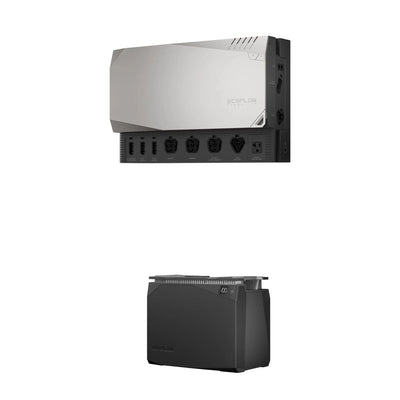
And if you'd rather start small and grow, the Anker SOLIX F3000 is our honorable mention. As of 2026, it costs $1,499.99 for 3,072Wh and 3,000 watts of output, and you can add Anker's 3,072Wh expansion battery later to double your storage to 6,144Wh. Prices change often, so check the product page before you order. You'll find all three in our portable solar generators collection, and if your budget stops at $500, take a look at our picks for solar generators under $500.
Budget Solar Generator Kits vs a Power Station Alone
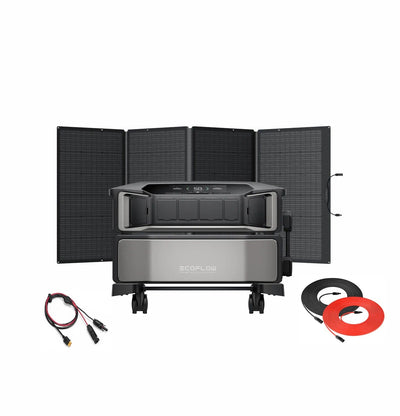
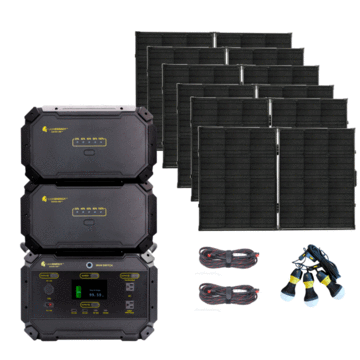
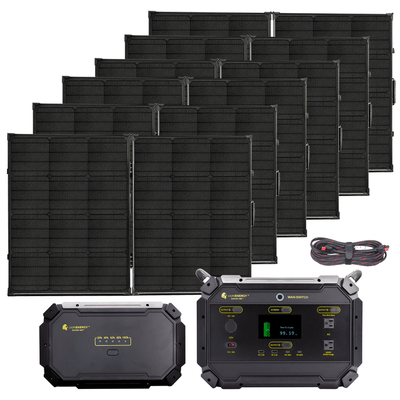
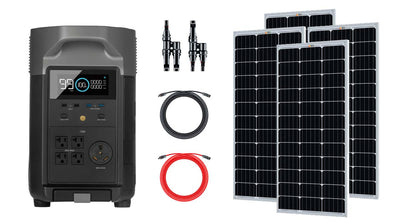
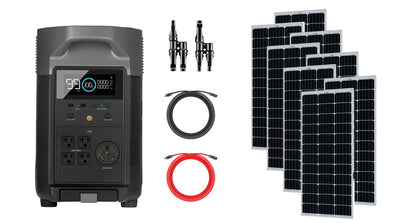
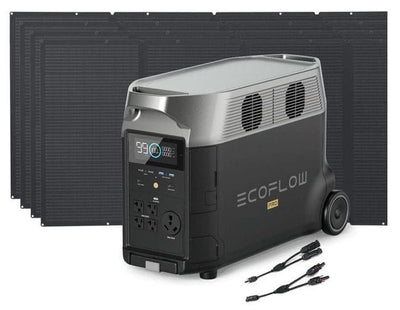
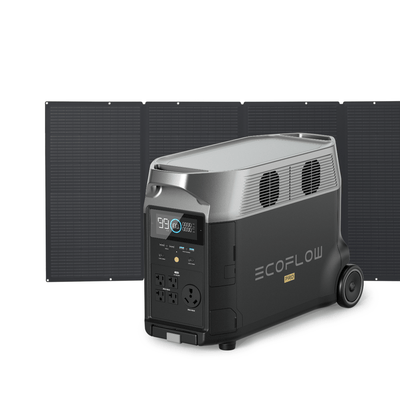
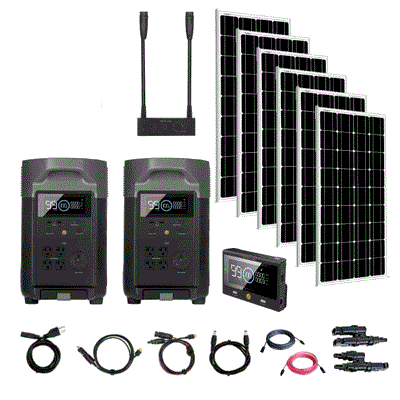
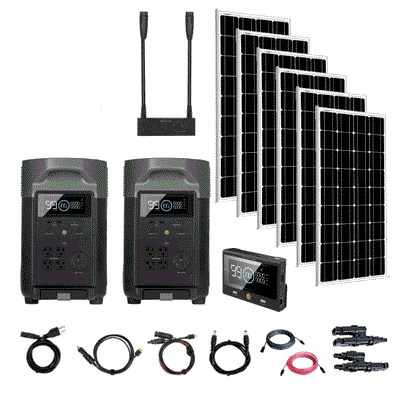
On top of the power station, you'll need panels to recharge it from the sun, and that's where a lot of people go over budget. A kit comes with the panels and cables in the box. With a station on its own, you'll pay less at checkout but still need to buy compatible panels separately. As of 2026, the Anker SOLIX F3000 costs $1,499.99 on its own and $1,999.99 with a 400W bifacial panel (one that collects sunlight on both sides).
Whichever way you go, check that your panels' total wattage stays within the station's solar input limit, because you won't charge any faster with panel wattage over that limit. You'll find units already paired with panels in our solar panel generators collection, and you can see how panels add to the price in our solar generator cost guide.

Recharging a Budget Solar Generator
Once your panels are set up, plan your recharging around the sun you'll get during an outage. Solar production varies with the season, the time of day, clouds and shade, so a unit that refills easily in July might only partly recharge in December. If you'll depend on it through storms or short winter days, size up a little on battery and panels.

Before You Buy a Budget Solar Generator
When you're ready to order, you can compare every size in our full range of solar generators, and read up on where to buy a solar generator so your warranty's protected. If you're stuck between two units, give us a call at (954) 249-2314 with your device list, and we'll help you pick the one that fits.
Frequently asked questions
Will a budget solar generator power a window AC?
A small window unit, for a few hours. A 5,000 BTU window AC draws about 400 to 600 watts once it's going, so the OSCAL PowerMax 2400's 2,400Wh would keep it on for about four hours, allowing for losses. If you want cooling through the night, look at a bigger system.
Can I pair two budget solar generators for 240V later?
Yes, with some models. PECRON sells a 240V box that links two E3600LFP units for 7,200 watts of 240V output, and Anker sells the F3000 with a Double Power Hub for 240V, so you can start with one unit and add the second later. Not every budget unit can do this, so check the listing before you buy if a 240V well pump or dryer is on your list.
Can I charge a budget solar generator from the wall before a storm?
Yes, and it's the surest way to start an outage with a full battery. As of 2026, PECRON lists a full wall charge of the E3600LFP at 1.8 hours with a standard 15-amp cable, or 1.3 hours with a 30-amp cable. Charge it fully as soon as a storm shows up in the forecast.
Can I add more panels to a budget solar generator later?
Yes, as long as you stay within the unit's solar input limits. The PECRON E3600LFP, for example, takes up to 2,400 watts through two solar ports, each rated for 1,200 watts at 32 to 150 volts. Do not wire extra panels so that the voltage goes over the limit, because you can damage the unit.
← Older Post Newer Post →