 (954) 249-2314
Whole House Solar Generators Prices: Kits vs. Installed Systems
If you're pricing a solar generator big enough for your whole house, you've probably seen prices from a few thousand dollars to well over $20,000. As of 2026, the whole-home systems in our store start at about $4,300 for an Anker SOLIX E10 starter setup and climb past $20,000 for the E10's largest automatic kit. Most of that gap comes down to how much energy you can store.
Compared with a plug-in system, a permanently installed rooftop solar and battery system usually costs a lot more once you add the panels, the wiring and the labor. If you're weighing the two, the cost of each stored kilowatt-hour is the easiest place to start.
Whole House Solar Generator Cost per kWh
Since storage makes up most of the price, the fairest way to compare whole house solar generator prices is cost per kilowatt-hour (kWh) of stored energy. As of 2026, the systems in our whole-house solar generators collection range from about $340 to $1,040 per kWh.
| System | Stored energy | Price in our store | Cost per kWh |
|---|---|---|---|
| PECRON F5000LFP with an FP5000 expansion battery | 10.24kWh | $3,498 | $340 |
| Anker SOLIX F3000 with Battery Pack | 6.14kWh | $2,499.99 | $410 |
| Jackery Explorer 5000 Plus Whole Home Backup Kit | 20kWh | $10,999 | $550 |
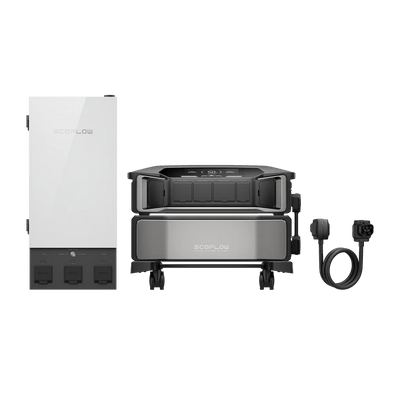
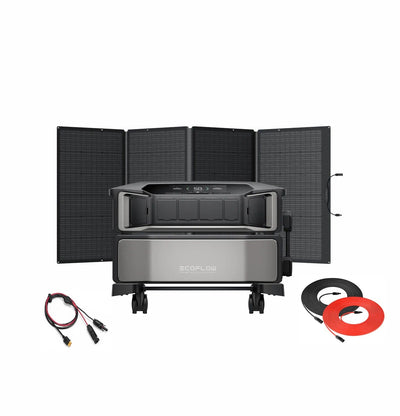
| EcoFlow DELTA Pro Ultra X | 12.3kWh | $7,999 | $650 |
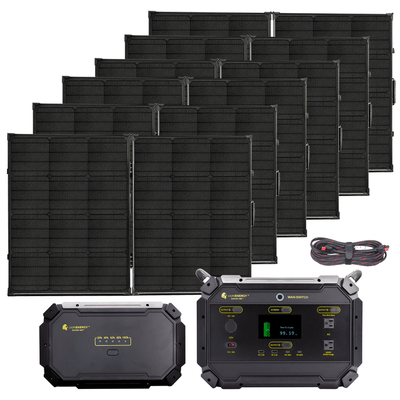
| Lion Energy Sanctuary 2 (one inverter, one battery) | 14.3kWh | $13,698 | $960 |
| BLUETTI EP900 with two B500 batteries and sub panel | 9.92kWh | $10,298 | $1,040 |
If you're wondering why the cost per kWh varies so much, the systems at the top of the table are portable power stations you stack with expansion batteries. The ones further down, like the Lion Energy Sanctuary 2 and the BLUETTI EP900, are installed permanently at your home's electrical panel. Prices change often, so check the product page before you set your budget.

What You're Paying for in a Whole House Solar Generator
Once you've got the cost per kWh in front of you, look at the output too, because a whole house solar generator has two limits. Capacity, in kWh, is the energy you've got stored, so the bigger it is, the longer you can keep the fridge and lights on. Output, in watts (W), is the most power you can draw at one time. A motor needs a short burst of extra power (its starting surge) to get going, and if that burst goes over the output rating, the system shuts off before your well pump or central air starts.
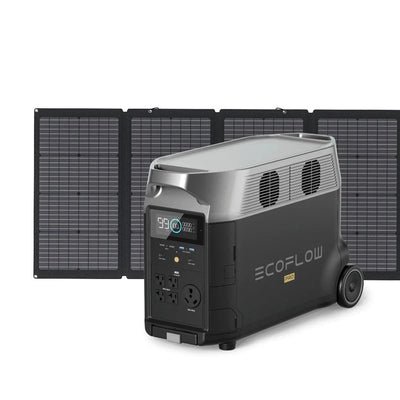
That's why two systems at a similar price can feel so different in an outage. As of 2026, the Jackery Explorer 5000 Plus stores 5,040Wh with 7,200W of output, and the Anker SOLIX F3800 stores 3.84kWh with 6,000W of output. With the Jackery, you've got about a third more energy stored, so you'll go longer between charges.
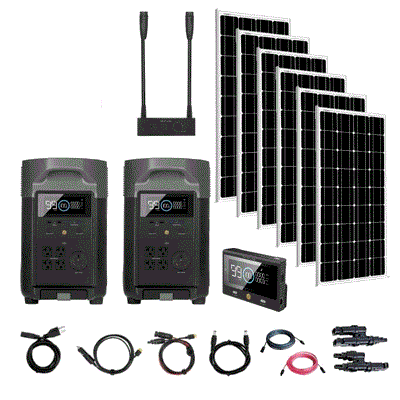
Keep in mind, too, that a lot of whole-home systems are expandable, so you can start with one battery and add more later. Just check what's in the box, because the first price you see might not be the full cost. For recharging through a long outage, you'll find units already paired with panels in our solar panel generators collection, and if you're not sure how big to go, find out whether a solar generator can power your house.
Whole House Solar Generator Cost vs Installed Solar
If you're comparing a whole house solar generator with a full rooftop installation, the jump in price can be a shock. In its 2025Q1 residential PV-plus-storage benchmark, the U.S. Department of Energy puts an 8kW rooftop array with a 13.5kWh battery at $36,720 installed, or $4.59 per watt. That's in 2024 dollars and before any incentives.
Even so, for that $36,720 you get panels on your roof, a battery wired into your home and an installer who takes care of the permits. Much of that money goes to labor, permits and overhead, though, which you skip with a plug-in system. If you only need the essentials covered, a smaller unit costs far less, and you'll find those prices in our guide to solar generator costs.

Costs People Miss in Whole House Solar Generator Prices
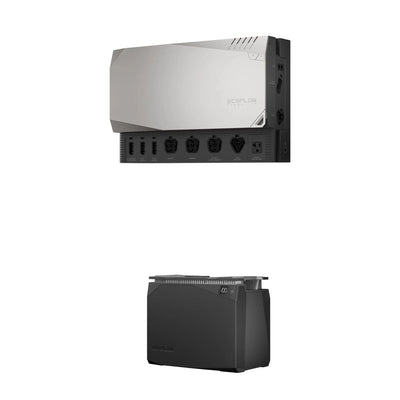
On top of the battery itself, you'll need a way to connect your system to your home's circuits, and that's where a lot of budgets come up short. As of 2026, the Anker SOLIX E10 costs $6,599.99 as a Manual Backup Kit and $7,799.99 as an Automatic Backup Kit, and the Jackery Explorer 5000 Plus goes from $3,149 on its own to $3,989 with a Smart Transfer Switch.
You'll also need a licensed electrician to install the transfer switch or sub panel, and your local building department will probably want a permit. Do not wire a generator into your home's panel yourself, because power can feed back into the utility lines and electrocute a lineworker. Get the electrician's quote before you order, so it's in your budget from the start.
If you already have rooftop solar, don't count on it in an outage, because most grid-tied systems shut off when the power goes out unless they were set up with a battery. For a permanent home setup, compare packages in our guide to solar power kits for homes, or for a shop or office, look at our commercial solar generators.

How to Compare Whole House Solar Generator Prices
When you start collecting quotes, the FTC advises homeowners to compare bids that list the system size and expected output, the full installation cost including permit fees, and the warranties on both the equipment and the workmanship. You can use the same checklist for a plug-in system:
- Divide the price by the kWh to compare cost per kWh.
- Check that the output covers your biggest loads when they're on together.
- Check whether panels, cables and expansion batteries are in the box.
- Note the warranty on each part.
Once you've narrowed it down, you can compare the leading systems side by side in our picks for the best whole house solar generator. If you'd like a second opinion, give us a call at (954) 249-2314, and we'll help you size your system.
Frequently asked questions
Can I still get the federal tax credit on a whole house solar generator?
Not for anything installed in 2026. The IRS says that the Residential Clean Energy Credit isn't available for property placed in service after December 31, 2025, and you claim it for the year the system is installed, not the year you bought it. Check with your state and your utility too, since some have their own rebate programs.
Is the $36,720 benchmark what I'd pay after incentives?
No. It's a pre-incentive figure in 2024 dollars, so your price could come in higher or lower. Ask each installer to show the price before and after any incentives, so you're comparing like with like.
How do I compare an installer's quote with a plug-in system's price?
Ask the installer to list the battery storage as its own line item, then divide that by the usable kWh. You'll end up with a cost per kWh you can hold up against the systems in the table above.
Should I size for winter conditions?
Yes. Snow, shade and short days slow down your solar recharging, so size your storage and panels for your worst month, and you won't come up short when you need backup most.
← Older Post Newer Post →