 (954) 249-2314
Can a Solar Generator Power a House? Sizing and Safety
Yes, a solar generator can power a house, as long as it's big enough for the things you want to keep on. If you've been through a few outages, you've probably already got a list in your head, whether that's just the fridge and the lights or most of the house, AC included. How far you'll get comes down to the inverter's output, the battery's capacity, how much sun you can catch to recharge, and how the system's wired into your home.
For a lot of homeowners, the appeal is the quiet, since there's no engine humming outside and no gas to store in the garage. The trade-off is that you'll need to plan around the sun and connect the system to your house the safe way.
What It Takes for a Solar Generator to Power a House
Before you get to the wiring, there are two numbers we'd look at first. The battery's capacity, in kilowatt-hours (kWh), is how much energy you've got stored, a bit like the fuel in your tank. The inverter's power, in kilowatts (kW), is how much you can draw at once, and if it's too small, your well pump won't start, however full the battery is.
Then there's the sun, which is the one part nobody can control. If you've ever watched the sky stay gray for days after a storm, you'll know how quickly your recharging can slow to a trickle, so you'll want enough battery to get you through the nights and the cloudy spells. And if you've already got rooftop panels, they probably won't keep the lights on by themselves, since most grid-tied systems shut off when the grid goes down unless they were set up with a battery and the right inverter.
How Long a Solar Generator Can Power a House
So how long will a full battery last you? You can get a rough idea by dividing the usable watt-hours by the average watts you'll have switched on. If you've got 3,600 usable watt-hours and you're drawing about 600 watts, that's six hours on paper.
In practice, you'll get a bit less than that, because you'll lose some energy along the way to:
- The inverter turning DC into AC, which always wastes a little
- The inverter's own power draw, even when you've only got a lamp on
- Very hot or cold temperatures, which cut how much the battery can give
- A reserve setting that holds back part of the battery
- Discharge limits that keep usable power below the nameplate rating
To size the inverter, take a fridge (150W), some lights and a TV (250W), and a well pump (1,000W):
- Running: 150W + 250W + 1,000W = 1,400W
- Starting (the pump at 3 × its running watts): 150W + 250W + 3,000W = 3,400W
So you'd want at least 1,400W continuous and a surge rating above 3,400W, but check your own nameplates, since appliances vary.
Reading the Ratings on a Home Solar Generator
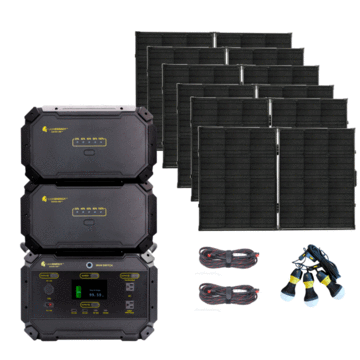
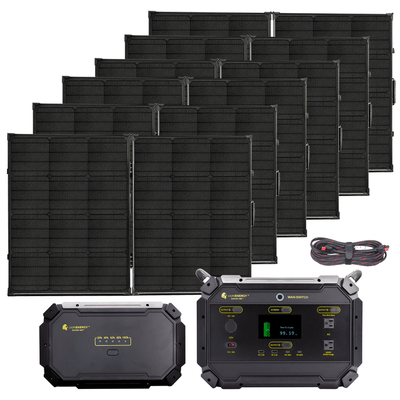
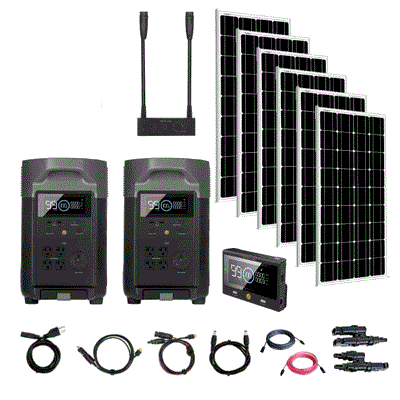
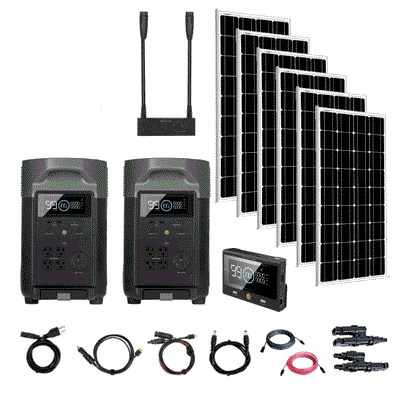
Once you've got your own numbers, it's easy to get tripped up by the one in a product's name. Take the Rich Solar 1250W 48V Complete Solar Kit, where the 1,250W is the solar panels, not the inverter. The inverter is rated for 6,500W and the battery holds 5.12kWh, so if you're checking it against your sums, it's the 6,500W you'd compare with your running watts and the 5.12kWh you'd use to work out runtime.
There's a catch with that kit, though. Its inverter puts out 120V only, so if your well pump or central air is 240V, it won't power them as it comes. It's also an installed system, and you can see how it compares with others in our guide to solar power kits for homes.

Powering More of Your House With a Solar Generator
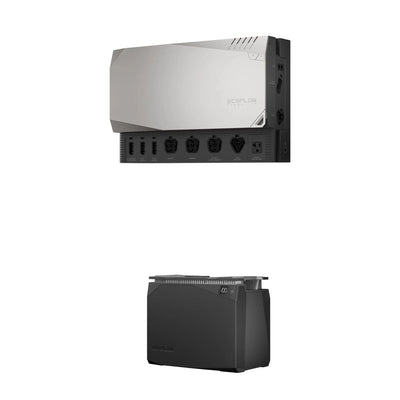
If you'd like to keep more of the house going, 240V loads and all, you'll be looking at a bigger system that you can expand over time. You can compare our picks for the best whole house solar generator and see what they'll cost in our guide to whole-house solar generator prices, and if you only need the essentials, take a look at our 5,000-watt solar generators.

How to Connect a Solar Generator to Your House Safely
Whichever size you go with, the way you connect it to your house is the part we'd never cut corners on. Do not plug a power station into a wall outlet to feed your home's circuits. The power can flow back out into the utility lines (called backfeeding), where it can electrocute a lineworker who thinks the lines are dead, and it can damage your equipment when the grid comes back on.
To do it safely, you'll need a transfer switch or a panel interlock (a plate that stops the main breaker and the generator breaker from being on at the same time), so your home's cut off from the grid while the generator's feeding it. Either one should be installed by a licensed electrician, who'll also know what your local code calls for. If you'd rather skip the wiring altogether, you can always plug your fridge and lamps straight into the generator's own outlets with heavy-duty extension cords.

Powering a House Through a Long Outage
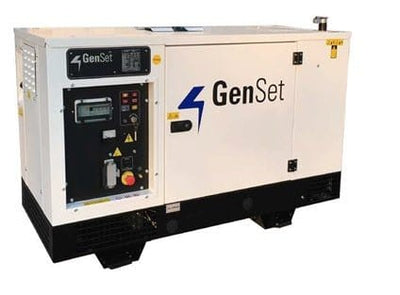
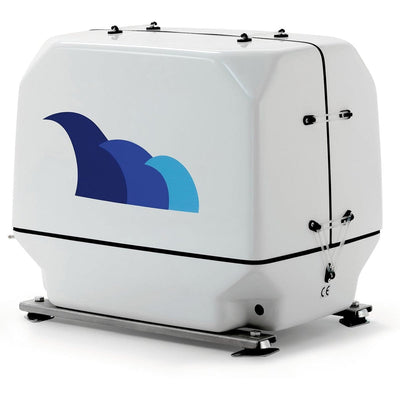
Once you're connected, the next thing to plan for in a long outage is how you'll keep the battery topped up. Solar's great for the essentials day to day, and when the cloudy days start stacking up, a gas generator makes a good partner, since you can recharge the battery with it for a couple of hours and then switch it off. Do not use a gas generator indoors or in your garage, and keep it well away from windows and doors.
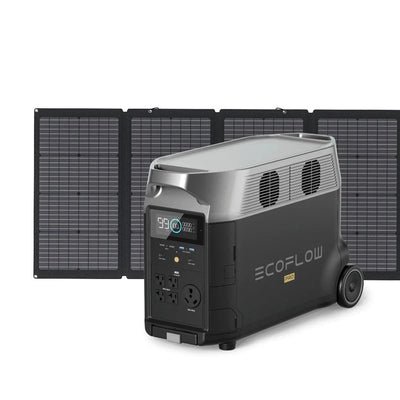
Before you buy, there are a few more things on the spec sheet we'd look at, like the operating and storage temperatures, whether the inverter puts out a pure sine wave (smooth power that's safe for electronics), its safety certifications and whether it can recharge while it's powering your loads. When you're ready to start matching your numbers to a system, have a look at our solar generators for home backup and solar panel generators.
Frequently asked questions
Can I keep my solar generator in a hot garage?
Only if your garage stays within the unit's rated storage temperatures, which you'll find on the spec sheet. A Florida garage in summer can get hotter than a lot of units are rated for, so if yours does, keep the generator inside the house and charge it there.
What if my system can't recharge while it's powering my loads?
Then you'll want to charge it in the middle of the day, when the sun's strongest, and switch off anything you can live without for a few hours. In a multi-day outage, you'll be counting on that midday charge to get you through each night.
← Older Post Newer Post →