 (954) 249-2314
Best 5000 Watt Solar Generator: Output, Battery, and Setup
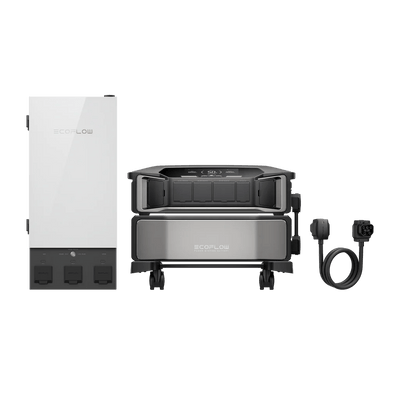
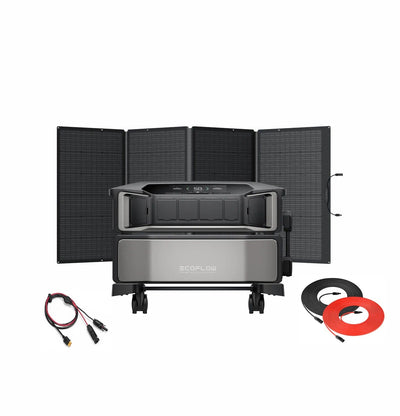
When you need to keep critical home circuits running through a blackout, or power an off-grid work site, a 5,000-watt solar generator gives you enough continuous output to do it. To pick the right one, you'll want to match its continuous output, battery capacity, and solar recharge speed to your own load list.
A lot of buyers assume that a 5,000-watt label means days of silent power, but output and stored energy are two separate numbers, and you need to check both.
Continuous Output Versus Stored Energy
Keep power and runtime separate in your head when you shop for a large solar generator. Battery capacity is the total energy the unit stores, in watt-hours or kilowatt-hours, and inverter output is the wattage you can draw at any one moment. You'll find the difference explained in the Department of Energy's solar and storage basics.
A 5,000-watt pure sine wave inverter can start heavy motor loads like well pumps, refrigerators, and portable air conditioners. To keep that output going, though, you'll need a large battery.
To estimate how long your backup will last, divide the stored energy by your average load. On paper, a 10-kilowatt-hour battery on an average 2-kilowatt load runs for 5 hours, and you'll get less than that once you count the inverter losses.
Do you only need electronics, lights, and a small refrigerator? Then a smaller system will cost you less, so take a look at our guide to 2000-watt solar generators or compare medium-capacity units in our article on 3000-watt solar generators.

Key Evaluation Criteria for 5000-Watt Systems
Before you buy, check these four things:
- Continuous and surge output: Make sure that the unit gives you 5,000 watts of continuous output and a surge rating of 7,000 to 10,000 watts for compressor startup.
- Split-phase 120V and 240V capability: you'll need 240-volt power for water heaters, well pumps, and clothes dryers.
- Solar input capacity: Look for at least 2,000 watts of solar input so that you can recharge a drained battery during daylight.
- Battery chemistry: Choose lithium iron phosphate (LFP) cells, which you can cycle 3,000 to 6,000 times before they lose meaningful capacity.
When 5,000 watts is more than your essential circuits need, you'll find smaller options in our guide to 4000-watt solar generators.

Safety Standards and Code Compliance
Large battery systems come with electrical safety rules that you should know before you install one. Start by working out whether your system is portable or wired permanently into your home, because that decides which standard applies.
Portable equipment falls under UL 2743. If you tie a stationary home energy storage system into your service panel, it needs a UL 9540 listing.
UL 2743 caps portable lithium-ion equipment at 20 kilowatt-hours of total battery capacity, and anything above that needs UL 9540 certification instead. So if you're planning to expand a portable unit past that point, check the expanded system's listing with our team before you install it.
Keep in mind that wiring several separately listed portable packs together on site doesn't give you a certified stationary installation under residential building codes.
Building codes also limit where you can put permanent storage. You cannot install it in a sleeping room or in a closet that opens directly into one.
Integrating a Solar Generator With Your Home
If you run heavy extension cords through doors or windows, you'll create a trip hazard and let the weather in, so for storm backup, we recommend a manual transfer switch or an interlock kit instead.
A transfer switch lets you pick which circuits to isolate from the utility grid. It stops power from flowing back into the utility lines (backfeeding), where it could endanger line workers, and it lets your generator power the furnace blower, refrigeration, lighting, and water supply circuits.
Always have a licensed electrician inspect your main panel and install the transfer equipment. Your electrician will check the grounding, match the breaker ratings, and confirm that the installation meets local building codes.

Practical Steps Before You Buy
Start by listing every appliance you plan to run at the same time, along with the running watts and starting surge from each data tag.
Next, take a look at your site. You'll need open ground or roof space for the panels, plus a dry, temperature-controlled spot indoors for the battery.
Finally, test the whole setup before severe weather hits. Check the panel input, the transfer switch, and battery charging so that you know it all works when the power goes out. And if you'd like a second pair of eyes on your plan, our team is happy to help.
Frequently asked questions
Does a 5000-watt label prove a unit can run my well pump?
No. Compare the pump's starting surge and voltage with the generator's surge output and split-phase capability, and then have an electrician check the connection.
What changes when I connect a portable unit to my service panel?
Once it's connected, you should treat the setup as stationary energy storage and check that it has the right UL 9540 listing. Your electrician should also follow the unit's instructions when installing the transfer equipment.
Can the solar generator charge while powering appliances?
It depends on the model. Some support simultaneous charging and output, so check the operating limits and solar input specs before you rely on it during an outage.
What if my inverter trips when I start up more than one motor?
Work out which motor loads are starting together and test them one at a time. If they still exceed the surge rating, change your load plan or have an electrician review the connection.
← Older Post Newer Post →