 (954) 249-2314
What Size Central Air Conditioner Can a Home Battery System Run?
One of the first questions we get about home battery backup systems is simple: What size central air conditioner will it run?

The answer is not based on AC tonnage alone. Two 4-ton air conditioners can have very different starting requirements. You need to compare the battery system’s 240V output and surge capability against the air conditioner’s running amps and locked-rotor amps, or LRA.
This guide compares eight popular home backup systems using specifications and AC claims published by EcoFlow, Anker, Jackery and Lion Energy. Where the manufacturer does not publish an exact tonnage rating, we say so instead of making one up.
Quick Central AC Comparison
| System | 240V Output | Manufacturer AC Claim | Important Conditions |
|---|---|---|---|
| EcoFlow DELTA Pro Ultra | 7,200W continuous; 10,800W surge | Up to a 4-ton central AC | EcoFlow says a soft starter may be needed when compressor LRA exceeds 120A. |
| EcoFlow DELTA Pro Ultra X | 12,000W continuous whole-home configuration | Up to a 5-ton central AC | Claim applies to the properly configured 12kW system; actual LRA still matters. |
| Anker SOLIX E10 | 7.68kW continuous per system; up to 10kW Turbo output | Up to a 5-ton central AC | Anker specifies up to 37.2kW/155 LRA surge when appropriately configured. |
| Anker SOLIX F3800 Plus | 6,000W and 25A per unit; 12,000W with two units and Double Power Hub | No official tonnage rating published | Anker says it supports central AC, but the compressor’s running amps and LRA must be checked. |
| Jackery Explorer 5000 Plus | 7,200W per unit; up to 14,400W with a paired system | No guaranteed tonnage published | Compare the actual compressor startup load against the selected configuration. |
| Lion Energy Sanctuary 2 | Published technical sheet: 8kVA, 33.3A, 120/240V | No official tonnage rating published | Lion’s current listing references a 12kW DC hybrid inverter. Confirm the exact inverter generation being supplied. |
| Lion Energy Sanctuary 3 | 12kVA, 50A, 120/240V per inverter | No official tonnage rating published | Lion lists HVAC among supported home loads; AC nameplate verification is required. |
| LionESS Vault | 24kW/100A residential configuration; commercial configurations up to 72kW/300A | No official tonnage rating published | Large HVAC capacity depends on the Vault configuration and total simultaneous building load. |
Compare the Systems
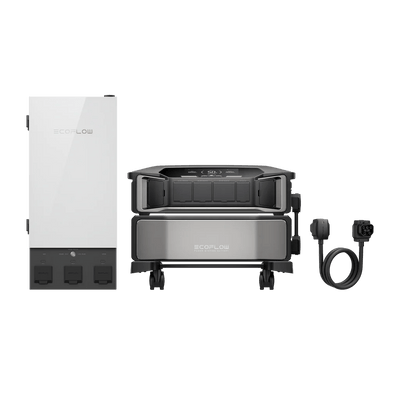
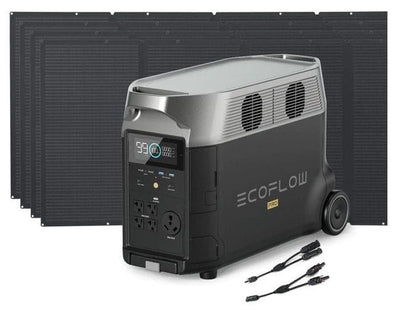
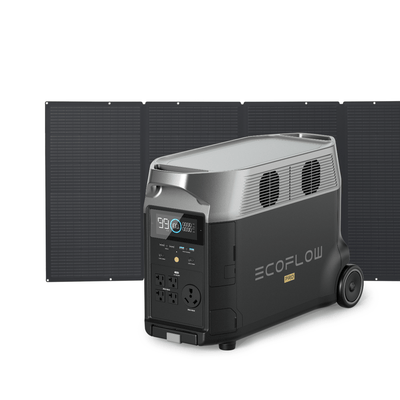
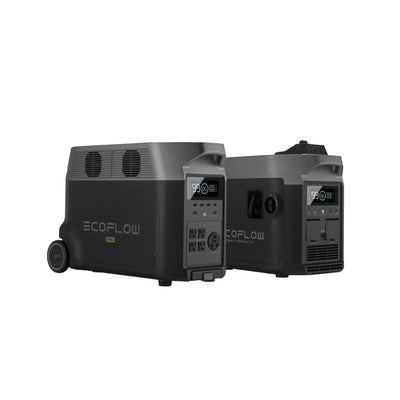
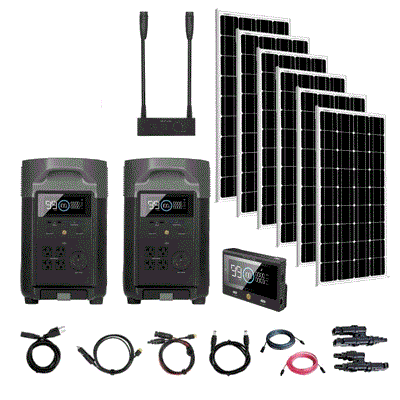
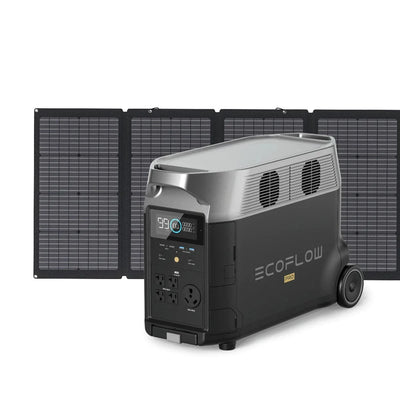
EcoFlow DELTA Pro Ultra
Published AC capability: Up to 4 tons
Output: 7,200W continuous and 10,800W surge at 120/240V.
Best fit: Homes needing essential-load backup with one central AC, refrigeration, lights and selected household circuits.
EcoFlow’s current whole-home information says one 7,200W unit can operate a 4-ton central air conditioner. There is an important condition: EcoFlow says a soft starter may be required when the air conditioner’s LRA is greater than 120A.
Adding batteries provides more runtime, but it does not increase the output of one inverter. Larger simultaneous loads may require another inverter or stricter load management.
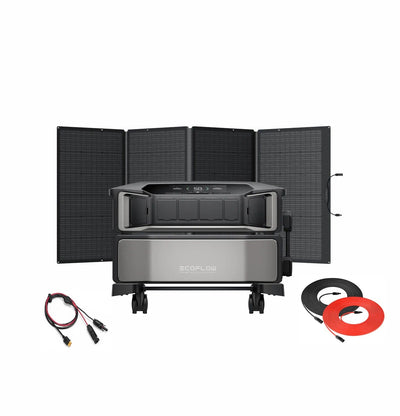
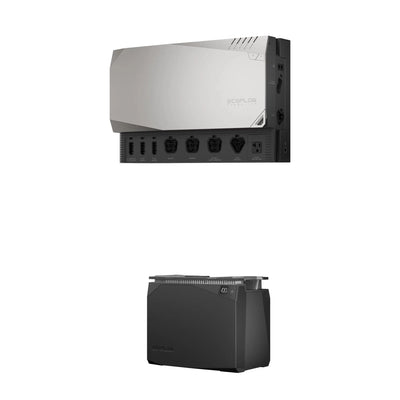
EcoFlow DELTA Pro Ultra X
Published AC capability: Up to 5 tons
Output: Up to 12,000W in the whole-home configuration.
Best fit: Larger homes, higher-demand central air systems and customers wanting broader whole-panel backup.
EcoFlow says its 12kW DELTA Pro Ultra X setup can power every circuit, including a 5-ton air conditioner, when used with the appropriate 200A smart-panel system.
That does not mean every 5-ton compressor is automatically compatible. Compressor LRA, air-handler demand and other loads running at the same time still need to be checked.
Anker SOLIX E10
Published AC capability: Up to 5 tons
Output: 7.68kW continuous per system with temporary Turbo output up to 10kW.
Starting capability: Up to 37.2kW and 155 LRA in the appropriate configuration.
Best fit: Whole-home backup where starting a large central AC compressor is a priority.
Anker specifically states that the E10 can provide enough surge power to start a 5-ton central air conditioner. Battery configuration matters because the highest surge specification may require additional battery capacity.
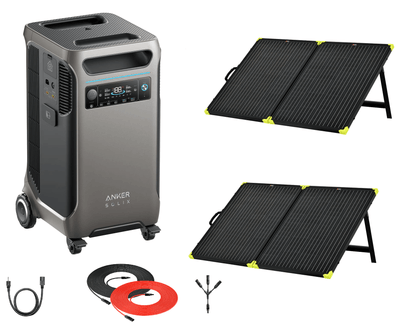
Anker SOLIX F3800 Plus
Published AC capability: Central AC supported; no official tonnage guarantee
Output: 6,000W, 120/240V and 25A from one unit.
Dual-unit output: 12,000W with two compatible units and the Double Power Hub.
Best fit: Essential-load backup, RV power, manual-transfer applications and selected central AC systems with manageable startup demand.
Because Anker does not assign the F3800 Plus a specific AC tonnage, it should be sized from the HVAC nameplate. A soft starter may make a difficult compressor easier to start, but it does not increase the F3800 Plus’s continuous output.
Jackery Explorer 5000 Plus
Published AC capability: No manufacturer-guaranteed tonnage
Output: 7,200W at 120/240V from one unit and up to 14,400W with a paired setup.
Best fit: Home emergency circuits, selected 240V appliances and central HVAC systems whose measured demands fit the configuration.
Jackery discusses central air startup requirements in its educational material, but it does not give every 5000 Plus installation one universal tonnage rating. Check both compressor startup demand and the power needed by the indoor blower or air handler.
Lion Energy Sanctuary 2
Published AC capability: No official tonnage rating
Technical-sheet rating: 8kVA, 33.3A and 120/240V split phase.
Best fit: Essential home circuits, refrigeration, lighting and compatible HVAC equipment.
Lion’s current product information references a 12kW DC hybrid inverter, while the published Sanctuary technical sheet lists an 8kVA rated AC output. Because Sanctuary 2 configurations have changed, verify the inverter specifications on the exact system being quoted before sizing an air conditioner.
Lion Energy Sanctuary 3
Published AC capability: HVAC supported; no official tonnage rating
Output: 12kVA, 50A and 120/240V split phase per inverter.
Best fit: Whole-home backup requiring more continuous power than the earlier Sanctuary platform.
Lion says Sanctuary 3 can keep HVAC systems and other home loads operating during an outage. The 50A output gives it meaningful central-air capability, but the correct answer still comes from comparing the actual compressor LRA and running current with the complete home load calculation.
LionESS Vault
Published AC capability: HVAC supported; no fixed tonnage rating
Residential 2×4 configuration: 24kW, 100A and 57.2kWh.
Larger configurations: Commercial systems are available up to 72kW and 300A.
Best fit: Large residences, commercial buildings, multiple HVAC systems and sites requiring substantially more storage and output.
The Vault is a configurable energy-storage platform rather than one fixed-size portable power station. A 24kW Vault can support far more simultaneous load than a 6–8kW portable unit, but the system still needs to be engineered around the building’s panel, HVAC startup demand and required runtime.
Why AC Tonnage Does Not Tell the Whole Story
A 3-ton or 4-ton rating describes cooling capacity, not electrical demand. The same-size air conditioners can use different compressors and have very different starting loads.
- Running amps: The current required after the compressor is operating normally.
- LRA: Locked-rotor amps, which indicate the compressor’s high starting demand.
- 240V output: Most central air conditioners require 240V split-phase power.
- Air-handler load: The indoor blower and controls also use electricity.
- Simultaneous loads: Refrigerators, pumps, water heaters and other circuits reduce the capacity available for HVAC.
- Runtime: Inverter output determines what can run, while battery capacity determines approximately how long it can run.
When Does an Air Conditioner Need a Soft Starter?
A soft starter reduces the compressor’s momentary startup current. It can help a battery inverter start an AC compressor whose normal running demand is acceptable but whose LRA is too high.
For the DELTA Pro Ultra, EcoFlow specifically says a soft starter may be needed when the AC compressor’s LRA is not within 120A. Other systems should be judged by their own published surge limits and the HVAC nameplate. A soft starter does not increase continuous wattage and will not make an undersized inverter suitable for an AC that draws too much power while running.
How to Check Your Central AC Before Ordering
- Find the outdoor condenser’s electrical nameplate.
- Write down the voltage, rated-load amps or running amps, and LRA.
- Check the indoor air handler or furnace-blower electrical requirements.
- List every other circuit you want operating while the AC runs.
- Confirm that the backup system provides 120/240V split-phase power.
- Ask whether the selected configuration requires a soft starter, smart panel, transfer switch or second inverter.
- Have the home connection completed by a qualified electrician.
Need Help Sizing It?
Send All Pro Generators a clear picture of the outdoor AC nameplate, the indoor air-handler information and a list of the other appliances you want to run. We can help narrow down which system is worth considering before you buy.
Call: (954) 249-2314
Email: sales@allprogenerators.com
Frequently Asked Questions
Can a 7,200W power station run central air conditioning?
Possibly. It must provide 240V power, enough continuous output for the compressor and air handler, and enough surge capability to start the compressor. EcoFlow specifically rates one DELTA Pro Ultra for up to a 4-ton central AC under its stated LRA conditions.
Will adding batteries let a system run a larger air conditioner?
Usually not by itself. Additional batteries mainly increase runtime. Higher output may require a second inverter, a paired-power configuration or a larger model.
Does every central AC need a soft starter?
No. The need depends on the compressor’s LRA and the inverter’s surge capability. Even when it is not mandatory, a compatible soft starter can reduce the strain caused by compressor startup.
Can these systems run the AC and the rest of the house together?
That depends on total simultaneous demand. A system may be able to start the AC but still require load management so that electric water heaters, dryers, ovens or EV chargers are not operating at the same time.
Which systems have an official 5-ton AC claim?
EcoFlow publishes a 5-ton claim for the properly configured DELTA Pro Ultra X system. Anker publishes a 5-ton starting claim for the SOLIX E10 based on its high surge and LRA capability. Compatibility should still be verified from the actual HVAC nameplate.
Manufacturer References
- EcoFlow DELTA Pro Ultra official specifications and AC guidance
- EcoFlow DELTA Pro Ultra X official specifications
- Anker SOLIX E10 official home-energy information
- Anker SOLIX F3800 Plus official specifications
- Jackery Explorer 5000 Plus official product information
- Lion Energy Sanctuary official information
- Lion Energy Sanctuary 3 announcement and specifications
- LionESS Vault official configurations and specifications
- Lion Sanctuary technical specification sheet
Specifications and manufacturer claims can change. This guide is for product comparison and does not replace an electrical load calculation, HVAC evaluation or professional installation.
- Tags: 120V 240V Home Backup Systems, 240V Power Stations, Air Conditioner Generator, Anker SOLIX E10, Anker SOLIX F3800 Plus, Battery Generator for Central AC, Central AC Backup Power, Central Air Conditioner, Emergency Home Power, Generator Sizing Guide, Home Battery Backup, Home Energy Storage Systems, Hurricane Backup Power, HVAC Backup Power, Jackery Explorer 5000 Plus, LFP Battery Backup Systems, Lion Energy Sanctuary 2, Lion Energy Sanctuary 3, LionESS Vault, Residential Battery Backup Systems, Residential Energy Storage Systems, Soft Starter for Central AC, Solar Battery Backup Systems, Solar Generator for Central AC, Solar Generators for Home Backup, Whole Home Battery Backup, Whole Home Battery Backup Systems, Whole House Solar Generators
← Older Post Newer Post →