 (954) 249-2314
Best 3000 Watt Solar Generator: Home Backup Sizing Guide
When the power goes out, a 3,000-watt solar generator gives you enough continuous output to keep your essential household circuits running. With it, you can power a full-size refrigerator, a sump pump, power tools, and medical devices, and you won't have to deal with exhaust or engine noise.
For a home or an off-grid cabin, a 3,000W inverter paired with about 3,000Wh of battery lets you cover a couple of essentials at the same time, and it's still light enough for one or two people to roll into place.
What a 3,000-Watt Solar Generator Can Power
The continuous wattage tells you how much power you can draw from the battery at any given moment. With a 3,000-watt inverter, you can run a couple of loads at once that would trip a smaller power station.
Before an emergency hits, make sure that you sort your critical appliances into tiers so that you know what you'll need to run first. Your full-size refrigerator will draw 150 to 400 running watts once its compressor kicks in, and a microwave uses about 1,200 watts. A sump pump needs 800 to 1,050 running watts, and when it starts up, its surge can briefly double that, so you'll want to leave room for it.
Do you only need one heavy appliance at a time? Then read our guide to 2,000-watt solar generators. And if you're mostly charging electronics on camping trips, you'll find lighter units in our practical review of 1,000-watt solar generators.

Inverter Output Versus Battery Capacity
Think of wattage as how much you can run at the same instant, and of watt-hours as how long you can keep it all running before the battery is empty. The Department of Energy's solar and storage basics explain the difference in more detail.
Run a 1,500-watt space heater on a 3,000Wh battery, and you'll drain it in under two hours. That same battery will keep a modern refrigerator that averages 200 watts running for 12 to 14 hours. For your own appliances, you can work out the runtime by dividing the stored energy by the average load, which is the method that NREL's solar and storage briefing uses.
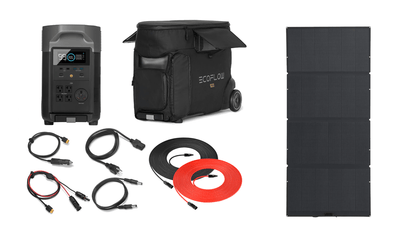
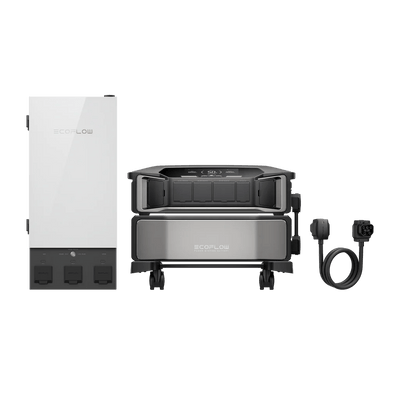
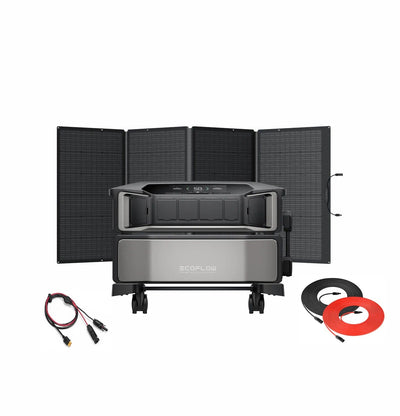
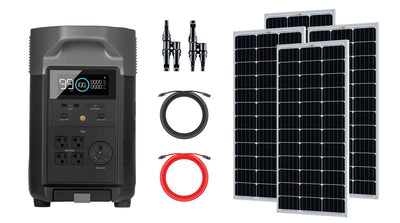
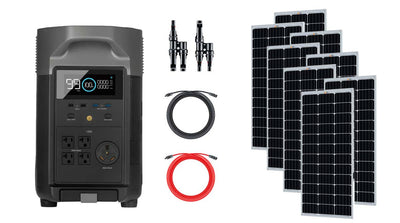
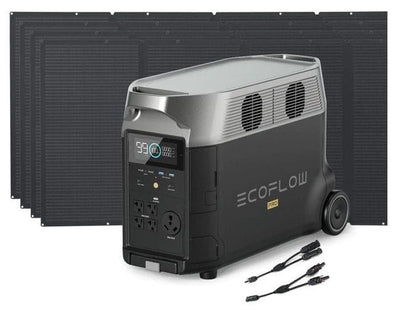
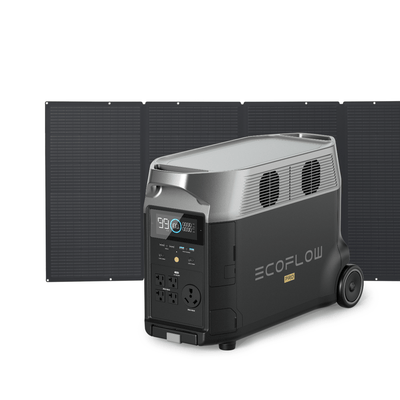
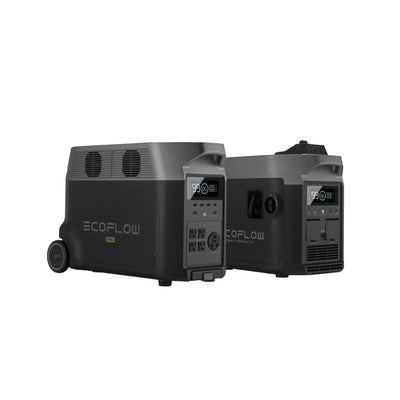
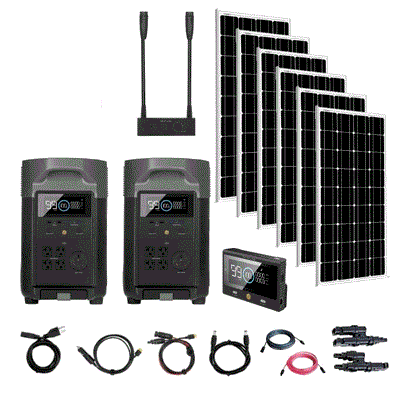
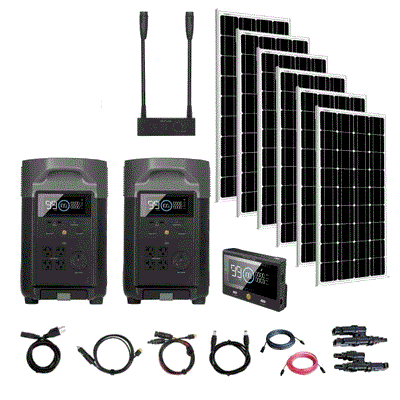
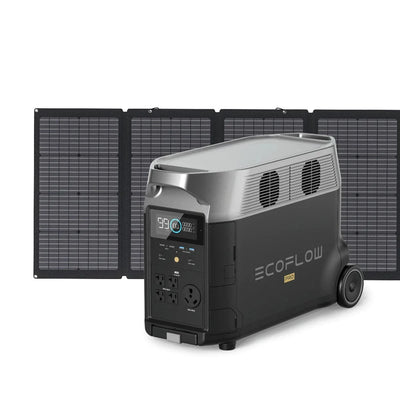
You'll find lithium iron phosphate (LFP) batteries in many high-capacity units, and you can charge them thousands of times. One unit we carry, the EcoFlow DELTA Pro, gives you 3,600 watts at 120 volts from a 3,600Wh battery. You can push it to 4,500 watts with EcoFlow's X-Boost feature or expand it to 25kWh with extra batteries..

Top Models in the 3,000-Watt Class
In this class, you can choose between a single rolling unit and a modular system that you can add batteries to later.
We point homeowners who want both solar and wind charging to the Nature's Generator Lithium 3600. You get 3,600 watts from a LiFePO4 battery, and because the kit comes with a 150-watt wind turbine, you can keep charging after the sun goes down. You can also pair two units whenever you need more power, for a total of 7,200 watts.
If you'd rather grow your system over time, look at the Bluetti AC300 with B300 battery. It pairs a 3,000-watt inverter (6,000-watt surge) with a 3,072Wh LiFePO4 battery, and you can add up to four B300 batteries to reach 12,288Wh. On the charging side, you can connect up to 2,400 watts of solar, and you can set the wall charging rate anywhere from 1,800 to 3,000 watts.
For a well pump or other 240-volt loads, you'll need to step above this class. The Anker SOLIX F3800 gives you 6,000 watts at 120V and 240V from a 3.84kWh battery, and you can expand it to 26.9kWh with six add-on batteries.

Comparing Solar Generator Sizes
To see how the sizes compare, look at the table below. It lists one model we carry at each size in this series.
| Size | Model We Carry | Continuous Output | Battery Capacity | When to use it |
|---|---|---|---|---|
| 1,000W | Jackery Explorer 1000 | 1,000W; 2,000W surge | 1,002Wh | Electronics, CPAP, lights, camping |
| 2,000W | Anker SOLIX C1000 Gen2 | 2,000W | 1,024Wh | A refrigerator, microwave, or power tools |
| 3,000W | Bluetti AC300 with B300 | 3,000W; 6,000W surge | 3,072Wh | A couple of essentials at once |
| About 4,000W | EcoFlow DELTA Pro | 3,600W at 120V, 4,500W with X-Boost | 3,600Wh | Heavier combined loads, 240V with two linked units |
| 5,000W and up | Anker SOLIX F3800 | 6,000W at 120V and 240V | 3,840Wh | Well pumps and other 240V circuits |
When your loads are heavier than a 3,000-watt unit can handle, you can compare options in our guide to 4,000-watt solar generators. For 240-volt equipment, you'll want our guide to 5,000-watt solar generators.
Solar Recharging and Storm Readiness
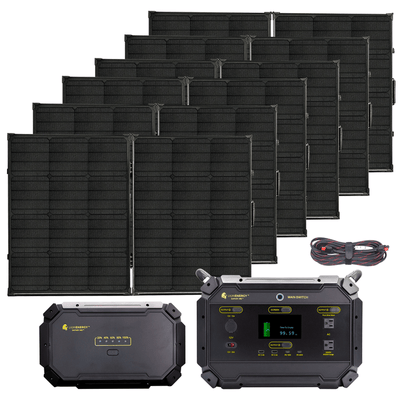
Until you connect solar panels, your solar generator is really just a large battery, and in a long outage, you can only keep it running as long as you can recharge it.
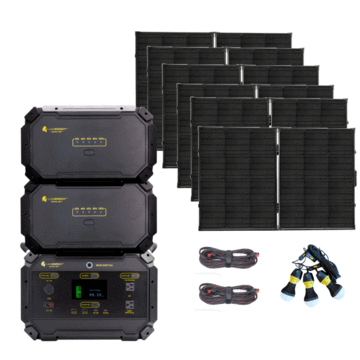
So as soon as severe weather shows up in the forecast, charge the battery all the way. We suggest pairing a 3,000W generator with 800 to 1,200 watts of solar panels, as long as you stay within the unit's solar input limit. With that much panel wattage, you can replace a day's use in four to five hours of strong sun.
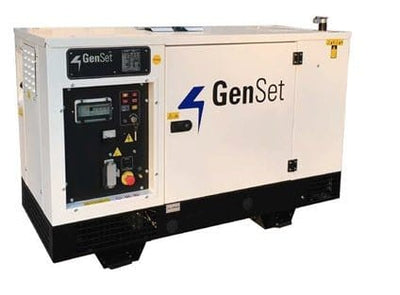
Cloudy days will cut your panel output, though, so make sure that you have a backup way to recharge, like a wall outlet while the grid is still up, or a gas generator.
How to Choose Your Setup
First, add up the wattage of everything you need to run at the same time. Then check the starting surge of anything with a motor.
To power household circuits, you'll need a transfer switch, and a licensed electrician should install it along with the inlet box. That switch also stops power from flowing back into the utility lines (backfeeding), where it could endanger line workers. Are your combined loads above 4,000 watts, or do they include central air? Then read our 5,000-watt solar generator guide.
When your system arrives, test it from end to end. Plug in your essential appliances, check how fast you can recharge it in direct sun, and confirm your plan well before the first storm hits.
Frequently asked questions
Can a 3,000W Unit Run a Refrigerator and Sump Pump Together?
Usually, yes. Together, they draw 950 to 1,450 running watts, but you should check both starting surges before you add another motor load.
How Do I Size the Battery for Overnight Backup?
Work out each appliance's watt-hours for the hours you'll need it, add them up, and then build in a reserve for inverter losses. Keep in mind that you won't get the full 3,000Wh as usable AC power from a 3,000Wh battery.
Can I Use a Solar Generator Indoors?
Yes. Because a battery power station produces no exhaust, you can run it indoors, as long as you follow the manual's ventilation, clearance, and temperature limits. Just keep your panels and outdoor cables dry and secure.
Can I Connect A Solar Generator to My Home's Electrical Panel?
Yes, but only through an inlet and transfer equipment that a licensed electrician installs. Never connect it through a wall outlet, and make sure that the unit's voltage matches your critical circuits.
← Older Post Newer Post →