 (954) 249-2314
Solar Generator vs Battery Bank: Which Setup Fits Your Property?
The main difference between a solar generator and a battery bank comes down to integration. A solar generator combines the battery, charge controller, and power inverter into a single portable enclosure. A standalone battery bank only stores power, so you have to add the inverter, charge controller, and wiring yourself.
If you need fast backup power without electrical wiring, then we recommend an all-in-one solar generator. But if you're building a permanent off-grid cabin or a custom home system, a dedicated battery bank gives you more room to expand.
How All-in-One Solar Generators Function
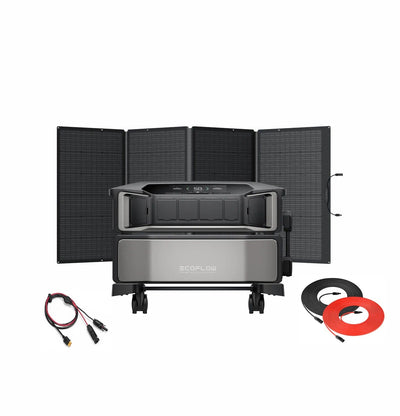
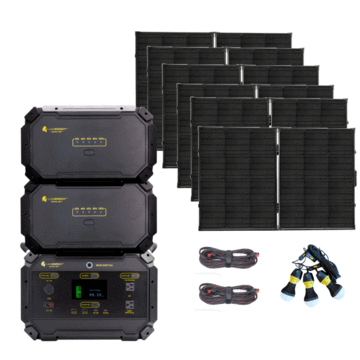
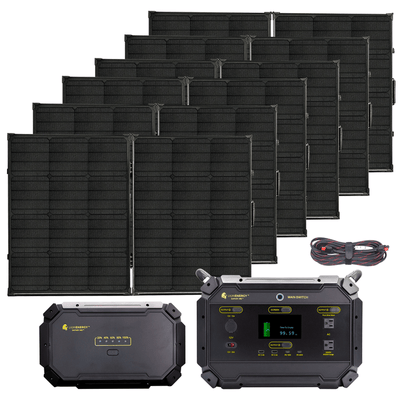
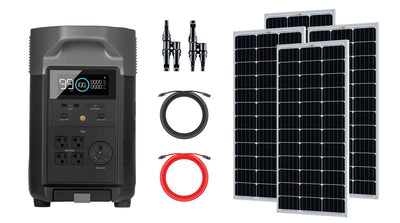
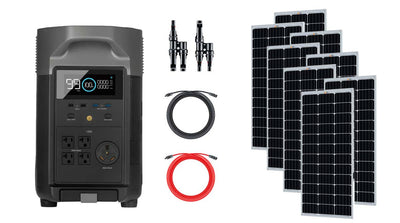
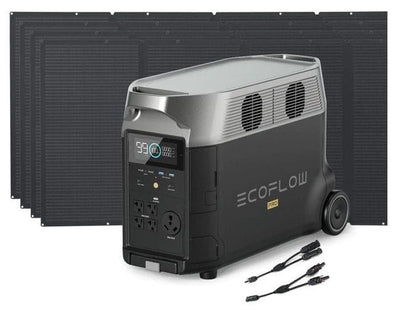
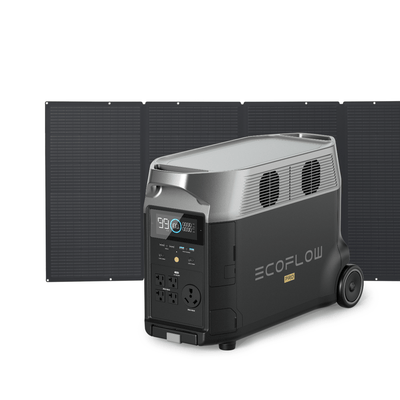
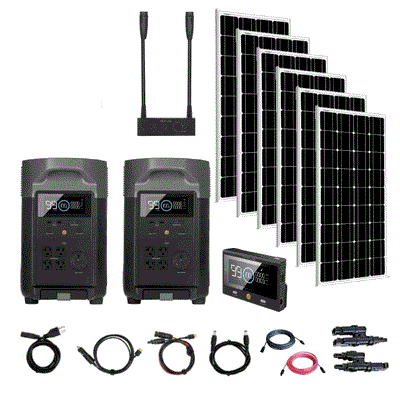
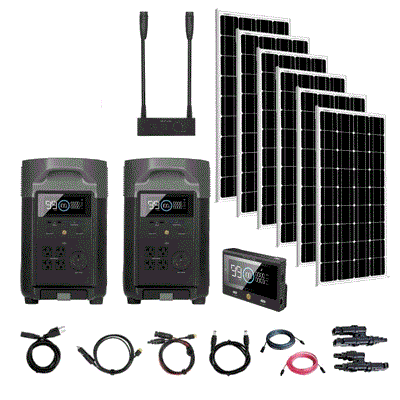
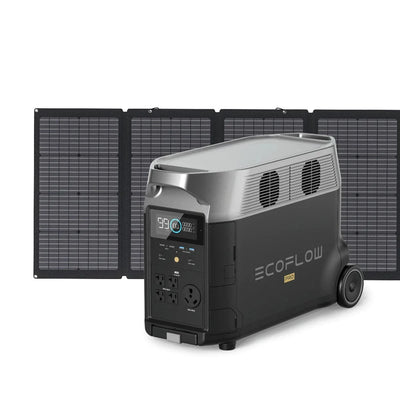
Think of a solar generator as a ready-to-use power station. Inside the case, the manufacturer pairs a lithium battery with a matched inverter, a solar charge controller, and circuit protection, so all you have to do is connect solar panels to the input port and plug your equipment into the outlets on the front.
You'll find the terminology and jargon explained in more detail in our solar generator and power station guide. A lot of homeowners choose these packaged units because they don't want to work out wire gauges, fuse sizes, and inverter matching. Nature's Generator units even add wind charging to the same all-in-one design.
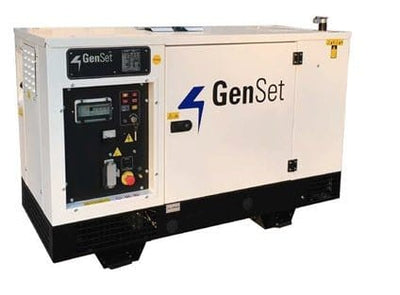
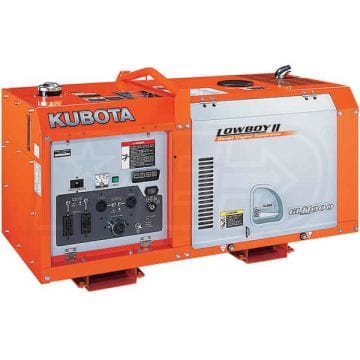
Because a battery power station produces no exhaust, you can run it indoors during severe weather, as long as you follow the manual's ventilation, clearance, and temperature limits. Fuel-burning engines produce carbon monoxide though, which is a lethal gas, so the EPA's power outage and indoor air guidance says to run them outdoors, away from windows and doors.
For grab-and-go power, you'll find built-in handles or wheels on our portable solar generators, which makes them handy for tailgating, job sites, and neighborhood blackouts.

How Dedicated Battery Banks Work
A battery bank is just one or more batteries wired together in series, in parallel, or both, and it stores direct-current electricity.
Since your household circuits run on alternating current, you'll need a separate inverter to convert that DC power into AC, as the Department of Energy's solar-plus-storage overview explains. You'll also need a solar charge controller to regulate the voltage coming from your panels.
Keep in mind that assembling a battery bank takes electrical know-how and the right tools. You'll have to crimp heavy-gauge copper cables, install the right fuses, and ground the metal enclosures. If you'd rather skip sourcing all those parts, start with our off-grid solar generators, which come as complete systems.
The big advantage of a custom bank is that you can scale it. If you'd like that kind of expansion without building a bank from separate parts, the Bluetti EP900 gives you 9,000 watts at 120V and 240V, and you can expand its storage from 9,920Wh to 19,840Wh.

Comparing Capacity and Inverter Output
Whichever system you choose, remember to keep stored energy and instantaneous power separate.
Energy capacity, in kilowatt-hours, is the total electricity you've got stored in the battery, and power capacity, in kilowatts, is how much you can draw at the same time, as the Department of Energy's Solar and Storage Basics explains. With storage, you can save the solar energy you collect at midday and use it after sunset.
| Feature | Solar Generator | Dedicated Battery Bank |
|---|---|---|
| Core Design | All-in-one chassis with inverter, charger, and plugs | Modular storage cells requiring separate external equipment |
| Installation | Plug-and-play with minimal setup | Requires custom wiring, external fuses, and mountings |
| Portability | High mobility in compact or wheeled enclosures | Stationary rack or wall-mounted installation |
| Component Replacement | Integrated unit serviced as an entire assembly | Individual components can be swapped or upgraded independently |
| When to use it | Home backup, camping, power outages, and renters | Permanent off-grid cabins, workshops, and custom solar setups |
On a solar generator, the inverter rating is fixed. If your unit has a 3,000-watt inverter, you can't run a 4,000-watt load on it by itself, although some models let you pair two units. With two Nature's Generator Lithium 3600 units, for example, you get 7,200 watts. A dedicated battery bank, on the other hand, lets you choose the inverter size that can match your peak load.

Choosing the Best System for Your Outage Strategy
You should choose based on where you live and how long you plan to stay there. Are you renting, or planning to move soon? Then choose an all-in-one solar generator, because you can load it into your vehicle without changing anything in the house.
Speed matters during storm season, too. You can have an all-in-one unit running the minute the lines go down, and you can compare specific capacities and features in our detailed solar generator comparison guide.
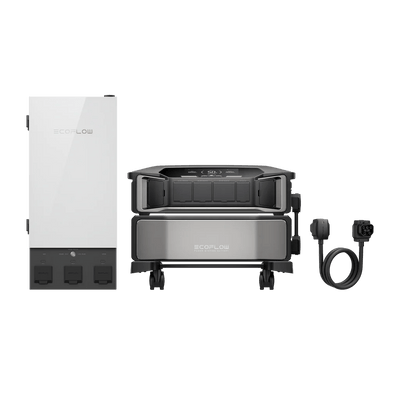
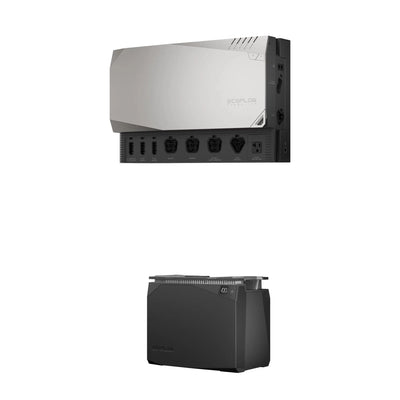
For larger homes, you can connect our solar generators for home backup to manual transfer switches, and many of them supply 120-volt and 240-volt power to critical circuits without a dedicated power room. The Nature's Generator MyGrid 10K, for example, is designed for permanent whole-home installation.
Would you rather have an open system where you can switch brands over the years? Then build a dedicated battery bank, and use our guide to reputable solar generator brands to research the manufacturers we carry.
Start by listing your essential appliances, their running wattages, and their surge needs. Then browse our solar generators for a system that fits, or have an electrician plan a hardwired battery room. Our team can also help you work through the numbers.
Frequently asked questions
Can a solar generator recharge during an outage?
Yes, when sunlight is available and the panels meet the unit's input limits. Check voltage, current, and wattage limits before connecting an array.
Do I need a transfer switch for a portable solar generator?
No, direct appliance use through the unit's outlets does not require one. Powering house circuits requires approved transfer equipment and a qualified electrician.
What if cloudy weather lasts several days?
Runtime then depends on stored energy, current load, and any alternate charging source. Keep a reserve for critical devices and verify whether your system accepts wall or vehicle charging.
What maintenance does a battery-based system need?
Follow the manufacturer's storage and temperature limits, keep vents clear, and test the system before storm season. Inspect cables and ports for damage, then service components according to the manual.
← Older Post Newer Post →