 (954) 249-2314
Best 2000 Watt Solar Generator for Home Backup
Do you need to keep a full-size refrigerator, a microwave, medical equipment, or your power tools running without the exhaust, pull cords, and engine noise of a gas generator? A 2,000-watt solar generator handles those jobs, whether you're backing up the essentials at home or working out in the field.
To pick the right one really comes down to the match between your continuous loads and the inverter output, and how long you need power against the battery capacity. Before you buy, check the starting surge of each appliance too, along with how the unit recharges.
Understanding 2000-Watt Output and Battery Capacity
Inverter wattage and battery storage are two different things, and plenty of shoppers mix them up. The 2,000-watt output rating tells you the most power you can draw at once. To find out how long you can keep your devices running, look at the watt-hours, which the Department of Energy's battery fact sheet explains in more detail.
With 2,000 watts, you can run a 1,500-watt microwave, a full-size refrigerator, or a circular saw. Plug a 1,500-watt heater into a 1,000-watt-hour battery, though, and you'll drain it in under forty minutes.
You'll also get less energy out than the nameplate says, because the inverter and the battery management system use part of the battery's stored energy.
So when you work out how much storage you need (appliance watts multiplied by hours of use), add a 20 percent margin. That way, you're covered for those losses and for any loads that end up running longer than you planned.

Our Pick: Anker SOLIX C1000 Gen2
Our pick in this class is the Anker SOLIX C1000 Gen2. You get 2,000 watts of continuous output and a 1,024Wh battery, all in a compact case that's easy to move and store.
That's enough to run a refrigerator, a microwave, a coffee maker, or your power tools, and you've got multiple AC outlets plus USB-A and USB-C ports to plug into.
Recharging from a wall outlet is fast, and you can connect solar panels too, so it suits weekend trips, job sites, and short blackouts. Just don't count on it for long outages or whole-home backup. For those, you'll need to step up to a bigger class.
If you only need a bit more battery than the C1000 Gen2 holds, though, the Anker SOLIX F1500 gives you 1,536Wh of LFP storage with 1,800 watts of output.

What a 2000-Watt Solar Generator Can Power
Almost any single household appliance with a standard 120-volt plug will run on a generator in this class. You can also run several smaller loads together, as long as their combined wattage stays under 2,000 watts.
Here's what typical appliances draw:
- Full-size home refrigerators: 150 to 400 running watts, with momentary starting surges up to 1,200 watts.
- Portable induction cooktops or electric skillets: 1,200 to 1,800 running watts.
- CPAP machines without humidifiers: 30 to 60 watts overnight.
- Home office workstations, including monitors, modems, and laptops: 120 to 250 running watts.
- Corded hand drills, circular saws, and shop vacuums: 900 to 1,800 running watts.
What won't it run? Central air conditioners, 240-volt clothes dryers, and electric water heaters are too much for this class. For those, you need a larger system with 120/240V output, which we cover in our 5,000-watt guide.
Matching Generator Size to Your Needs
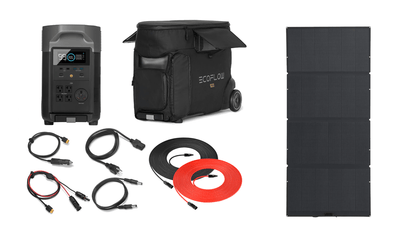
Maybe you only need to charge phones, run camping lights, and power a small cooler. In that case, a lighter, more portable unit from our guide to the best 1,000-watt solar generators will do the job.
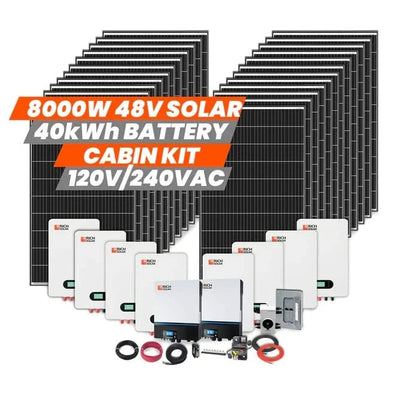
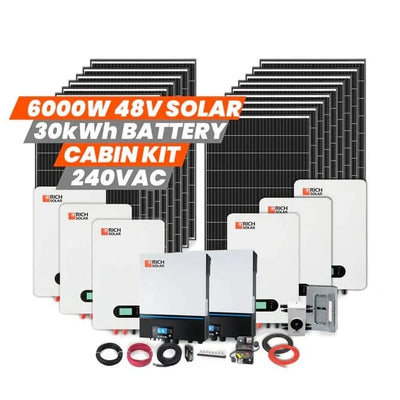
To run a couple of essentials together, like a refrigerator and a sump pump, you'll need more output than this class gives you, so take a look at our guide to 3,000-watt solar generators. For heavier combined loads, our guide to 4,000-watt solar generators is the next stop.And if you have a well pump or other 240-volt circuits, head to our guide on the best 5,000-watt solar generators to handle multi-room breaker panels.
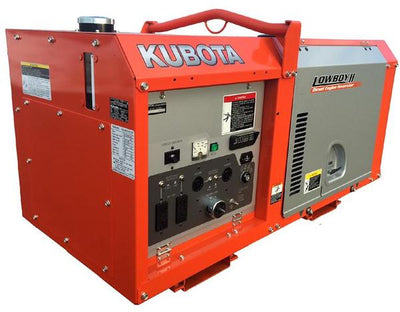
Job trailers and work sites often need more output too, so check out our commercial solar generators.
If your cabin runs on solar every day, you need a system sized for daily cycling. Start with our off-grid solar generators.
Outage Preparedness and Battery Safety
During a grid failure, a home solar-plus-storage system only keeps your essential circuits running if its inverter can operate without the grid, as the Department of Energy's solar and storage basics explain.
Because a battery power station produces no exhaust, you can run it indoors, as long as you follow the manual's ventilation, clearance, and temperature limits. Charge and store it somewhere cool and dry, too. The U.S. Fire Administration's lithium-ion battery guidance also says to check lithium batteries regularly for case damage, bulging, or unusual heat.
Never run your power station in standing water or leave it out in the rain. And keep your solar extension cords tidy, so nobody trips over them in the dark.

Selecting Your Setup
Start with a list. Write down the running watts and surge rating of every appliance you must power, then make sure that everything you'll run at the same time adds up to less than 2,000 watts.
When it's time to choose panels, check the unit's solar input limit first. Then size your array so that it can refill the battery on a clear day.
Finally, test the whole system before storm season. Run your critical appliances on battery power for a while, so you'll know exactly what to expect when the grid goes down.
Frequently asked questions
Can a 2,000-watt solar generator run a refrigerator and CPAP at once?
In most cases, yes, as long as the refrigerator's startup surge and both running loads stay within the inverter's limits. Check the power station's surge rating first, and see whether your CPAP's humidifier is switched on.
How should I estimate refrigerator runtime?
Measure how much power your refrigerator uses on average, then divide the usable watt-hours by that number. Don't go by the nameplate running wattage, because the compressor cycles on and off, so the fridge doesn't draw that much all the time.
Can I plug a 2,000-watt power station into a home wall outlet to power the house?
No. You can't safely feed your house wiring through a standard wall outlet. If you want to back up your panel, you'll need compatible transfer equipment installed by a qualified electrician.
Can I use any solar panel array?
No. Your panels have to match the power station's limits for solar-input voltage, current, connector type, and charge controller, so check those specs and make sure that your array stays within them.
← Older Post Newer Post →