 (954) 249-2314
Best Tri Fuel Generators: A Practical Buying Guide
The best tri fuel generators run on gasoline, propane, or natural gas from a single machine, so one bad fuel situation during a storm does not leave you without power. At All Pro Generators, we see this play out every hurricane season: the buyers who prepared with the right model and the right connection plan before the storm made it through multi-day outages without scrambling for gasoline. Understanding the benefits of having a generator can help you prepare for outages before demand spikes. The ones who waited ordered too late to ship.
What to sort out before you pick a model
- Fuel-specific running watts: Size from the output rating for the fuel you will actually use. Natural gas ratings are consistently the lowest of the three fuels on the same machine.
- Starting watts for motor loads: HVAC, well pumps, and sump pumps surge hard at startup. Your generator's starting-watt capacity must cover your largest motor surge plus the rest of your running loads simultaneously.
- Natural gas supply capacity: A generator pulling 225,000 BTU at full load needs the right inlet pressure, typically 6.0 to 9.0 inches water column, and a branch line sized for that demand. A licensed plumber should verify your meter and piping before you rely on natural gas.
- Propane tank size: A 20-lb grill tank may last only 4 to 7 hours at 50% load. Plan your tank size against a realistic outage length, and note that many fire codes cap residential propane storage at 100 lb without a permit.
- Gasoline storage plan: Gasoline with stabilizer stays usable for one to two years in approved containers kept outside living areas. Two days of heavy operation can burn well over 40 gallons, so a small reserve runs out fast.
- Transfer switch or interlock: A portable generator's outlets power cord-connected appliances directly. Powering hardwired loads like a furnace, well pump, or sump pump requires a properly installed transfer switch or interlock, confirmed by a licensed electrician before storm season.
- CO placement: Every tri-fuel generator produces carbon monoxide. Exhaust must stay at least 20 feet from any door, window, or vent. A built-in CO sensor is a useful automatic shutoff, not permission to operate the unit near the house.
- Weight and noise: Open-frame models in the 9,500 to 13,500-watt class typically weigh 200 to 250 pounds and rate 74 to 79 dBA at 23 feet. Inverter-style tri-fuel units can reach 62 to 64 dBA with cleaner power output for electronics.
Tri-fuel generator options by buyer fit
Sizing from the right fuel column matters here.
A generator rated 13,000 watts on gasoline may deliver only 8,500 running watts on natural gas.
A refrigerator runs 150 to 400 watts but surges to 1,200 watts at startup. For a practical essentials-sizing baseline, see the Best Generator Buying Guide - Consumer Reports, which lists a refrigerator at about 600 watts and a sump pump at about 750 to 1,500 watts.
A half-horsepower sump pump runs 500 to 800 watts and surges to 1,600 watts.
A 2-ton central air conditioner runs 2,000 to 2,500 watts and can surge to 4,500 watts.
Add your running loads first, then add only the largest single motor surge on top.
That total is your minimum starting-watt requirement on your chosen fuel.
DuroMax tri-fuel options from 7,000W to 11,000W
This range fits buyers prioritizing essential circuits, quieter inverter operation, or easier movement and storage.
The DuroMax XP7000iHT 7,000W Tri Fuel Inverter Generator is the smaller verified option in All Pro Generators' active catalog for focused backup loads.
The DuroMax XP11000iHT 11,000W Tri Fuel Inverter Generator provides a step up for buyers who need more capacity while staying in the inverter class.
Choose between them from the running output on your intended fuel, your measured essential loads, and the largest motor startup requirement.
For an integrated Anker home-backup system, the Anker SOLIX Smart Generator 5500 Tri-Fuel Generator for E10 Home Backup is the catalog-verified option closest to the client's 5,000W note. It is intended for the Anker SOLIX E10 ecosystem, not as a general substitute for a standalone portable DuroMax.
Larger loads and home-backup-ready connections: 13,000W class
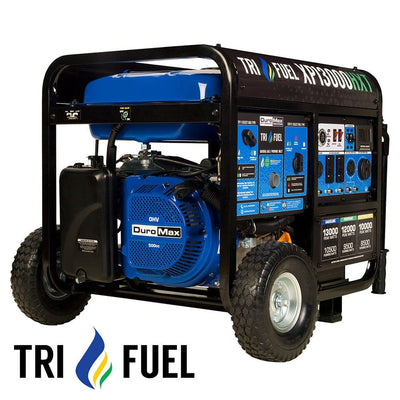
The DuroMax XP13000HXT 13,000 Watt Tri Fuel Generator is the standout in this range. Its fuel-specific output is 10,500 running watts on gasoline, 9,500W on propane, and 8,500W on natural gas, with a 5-year warranty, CO Sensor Shutdown, automatic low-oil shutdown, 100% copper windings, and an outlet set that includes a 14-50R, L14-30R, L5-30R, and four 5-20R GFCI outlets. It is labeled Home Backup Ready and RV Ready.
Gasoline runtime from the 8.3-gallon tank is 17 hours at 25% load and 8.5 hours at 50% load.
Propane runtime drops to 13 hours at 25% load and 6.5 hours at 50% load, with a minimum recommended 40-pound propane tank.
The natural gas requirement is 225,000 BTU at full load at 6.0 to 9.0 inches water column at the inlet.
At 240 pounds dry, it is a substantial machine that requires infrastructure planning, not a last-minute setup. Place a portable generator well away from the house, following NIST guidance that highlights the serious carbon monoxide risk and recommends keeping generators at least 20 feet from open windows, doors, and vents Generator placed far from house | NIST.
A licensed natural gas plumber should verify meter capacity, inlet pressure, and line sizing before you connect this generator to a home gas system.

Higher-output DuroMax tri-fuel options: 15,000W to 28,000W
All Pro Generators also carries verified DuroMax tri-fuel models for buyers whose load calculations exceed the 13,000W class.
The 15,000W class includes the DuroMax XP15000HXT 15,000 Watt Tri-Fuel Portable Generator and the newer DuroMax XP15000HXT+ EFI Tri-Fuel Portable Generator. Compare their fuel-specific running output and connection requirements before choosing between them.
The DuroMax XP16000iHT 16,000 Watt Tri Fuel Portable Inverter Generator is the verified higher-output inverter option in the current catalog.
At the top of the current portable range, the DuroMax XP28000iHT 28,000-Watt Tri Fuel Portable Generator is intended for substantially larger load plans that have been checked carefully against fuel-specific output and site infrastructure.
More headline wattage does not replace load calculation, gas-line verification, transfer equipment planning, or safe placement. Size from the exact model's rating on the fuel you will use. For safe operation during an outage, follow the CDC’s What to Do to Protect Yourself During a Power Outage | CDC guidance and keep generators outside, at least 20 feet from doors, windows, and vents.
How tri-fuel compares to other generator types
| Generator type | Best for | Fuel flexibility | Major tradeoff |
|---|---|---|---|
| Tri-fuel portable | Storm prep, essential-circuit backup, flexible fuel access | High: gasoline, propane, natural gas | Manual setup, heavy, not automatic |
| Dual-fuel portable | Tighter budgets, simpler fuel planning | Medium: gasoline and propane | No natural gas option |
| Gas-only portable | Basic portable backup, short outages | Low: gasoline only | Fully dependent on gasoline supply |
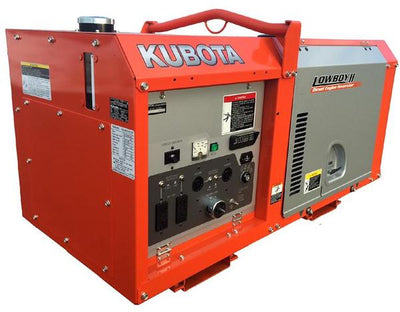
| Diesel portable | Long-duration jobsite or business use | Low: diesel only | No propane or natural gas option |
| Home standby | Whole-home automatic backup | High: propane or natural gas | Higher cost, professional installation required |
| Portable solar | Quiet, fuel-free essential backup | None: solar and battery | Limited output, weather-dependent recharge |
Dual-fuel generators cover most of the same ground at a lower price but leave out natural gas.
If your home has a gas line that typically stays active during outages, the third fuel adds genuine resilience.
If natural gas is not realistic for your property, a quality dual-fuel generator may be the cleaner choice.
Diesel is excellent for long-duration business continuity but does not solve the fuel-shortage problem that makes tri-fuel worth buying in the first place.
Home standby units start automatically and run indefinitely on natural gas or propane, which is hard to match, but the cost and installation requirements are in a different category.
How to choose the right model for your situation
- Decide your primary fuel first. If your home has natural gas service that stays active during local outages and your gas line can support the BTU demand, natural gas is the most convenient long-term option.
- If natural gas is not realistic, choose propane as your primary planned fuel. Propane does not degrade, stores independently of open stations, and avoids the rotation schedule that gasoline requires.
- Calculate your essential running watts using your primary fuel's output rating, not the gasoline number. Add all running loads first.
- Add only your single largest motor surge load on top of that running total. That combined figure is your minimum starting-watt requirement.
- Add 20 to 25 percent headroom above that calculated total. Running a generator near its limit accelerates wear and leaves no margin for a load you forgot.
- Have a licensed plumber verify your gas supply before finalizing a natural-gas-capable model. Check meter capacity, inlet pressure, and branch-line sizing against the generator's full-load BTU requirement.
- Plan your transfer switch or interlock installation before hurricane season, not during the storm. Confirm neutral bonding compatibility with a licensed electrician.
- Confirm placement logistics before the storm arrives. A 240-pound generator needs a clear, level path at least 20 feet from the structure. Test-run it to verify all three fuel modes work and check oil before storage.
- Set a service reminder for oil changes. For units like the DuroMax XP13000HXT, the recommended interval is every 50 hours of operation or at least once per year using SAE 10W-30.

The best tri-fuel generator for your home is the one sized correctly for your essential loads on the fuel you can reliably access, connected safely before the next storm.
For most homeowners, the 9,500 to 11,500-watt class covers essential-circuit backup well.
Larger homes or buyers who want more headroom should look at the duromax xp13000hxt tri fuel generator class, keeping in mind that natural gas output is materially lower than the gasoline peak and that gas line capacity must be confirmed by a professional. For comparison, our guide to the best solar generators covers battery-powered options for quieter, fuel-free backup.
Browse our tri-fuel generator collection and reach out to our US-based team to match the right model to your load and fuel plan before hurricane season demand sets in.
Frequently asked questions
Are tri-fuel generators safe to connect to a home panel?
Yes, but only with a properly installed transfer switch or compatible interlock and inlet. An electrician should also verify neutral bonding, grounding, and whether the generator’s connection requires switched-neutral equipment.
Can a small natural gas line run a large tri-fuel generator?
Not necessarily. Check the generator’s required inlet pressure and BTU capacity, then have a licensed gas professional evaluate the meter, regulator, pipe size, line length, and other appliances running on the same system.
What size propane tank does a tri-fuel generator need?
Tank requirements vary by model and load, so use the manufacturer’s minimum rather than assuming a grill cylinder is sufficient. For example, the DuroMax XP13000HXT recommends at least a 40-pound propane tank, while runtime also depends on the load and temperature.
Should I test all three fuels before storm season?
Yes. Run the generator briefly on gasoline, propane, and natural gas if each connection is available, checking startup, transfer equipment, leaks, and output under load. This can reveal a weak gas line, incorrect hose fitting, stale gasoline, or an incompatible connection before an outage.
← Older Post Newer Post →