 (954) 249-2314
Best Dual Fuel Generators for Home Backup and Storm Prep
The best dual fuel generators for a U.S. home are not a single model but a range sized by how many circuits you need to protect, how easily you can move the unit, and which fuel you can realistically store or refill when the power goes down. At All Pro Generators, we have been selling these units since 2018 and watch the same practical questions come up every hurricane season: which size, which fuel, and how do I connect it safely?
What changes when you go dual fuel
A dual-fuel generator runs on either gasoline or propane, and you choose the fuel at the moment you need power.
That single feature matters in an outage because gasoline access can tighten fast. For a manufacturer overview of how dual-fuel generators provide gasoline and liquefied propane options, see Introducing Champion Power Equipment’s New Line of Dual Fuel Generators.
Gas stations lose power too, lines form quickly, and untreated gasoline left in a fuel system for more than 30 days can deteriorate and damage carburetor components.
Propane stored in sealed cylinders or a bulk tank does not have that problem, which makes pre-storm storage far more manageable.
The trade-off is real.
Propane delivers slightly lower wattage on most models, and cold weather can make propane starting difficult, especially from a smaller cylinder.
The practical fix is to start on gasoline in cold conditions and switch fuels after the engine is running and warmed up.
Runtime numbers in advertising also mean little without knowing the load percentage and fuel quantity used in that test, so always read the fine print before comparing models side by side. Understanding generator uses can help you compare runtime claims against the loads you actually need to power.
What to look at before you choose
- Running watts vs. starting watts: Running watts are the continuous load the generator can carry. Starting watts are the short burst a motor-driven appliance demands for two or three seconds when it starts. A refrigerator, sump pump, or window AC can demand two to three times its running wattage at startup, so the generator's surge rating on your chosen fuel must cover that moment.
- Fuel-specific output: Nearly every dual-fuel model rates differently on gasoline versus propane. Read both ratings separately. Gasoline usually wins on peak output; propane usually wins on long-term storage convenience.
- Inverter vs. open-frame design: Inverter generators throttle the engine down under lighter loads, cutting noise and fuel use. Open-frame conventional generators run at a fixed RPM and produce more raw wattage for the dollar but consume more fuel doing it.
- Noise level: Inverter models commonly run at 52 to 62 dB at 25% load. Open-frame models at full load can reach 78 dB or higher. Noise matters to neighbors and to anyone trying to sleep through a storm.
- Connection method: Extension cords to individual appliances are the simplest setup for portable units. Powering household circuits safely requires a properly installed transfer switch or panel interlock by a qualified electrician. Never connect a portable generator to a wall outlet.
- Weight and portability: The word portable covers a wide range. A 47-pound inverter and a 345-pound open-frame unit are both labeled portable by manufacturers, but they require very different handling plans.
- CO safety technology: CO shutoff features cut power when carbon-monoxide levels rise near the unit. This is a useful backup layer, not a reason to operate the generator closer to the house or indoors.
Models that fit different home situations
Start by listing only what you need to keep running at the same time: refrigerator, a few lights, a phone charger, a medical device, a well pump, or heating controls.
Add up their running watts, then find the single motor-driven appliance with the biggest startup surge and add that surge value on top.
The result must fall below the generator's running watt rating for your chosen fuel.
Load management makes a smaller generator realistic for many homes.
Refrigeration, communications, and medical equipment should run continuously.
High-draw loads like central air conditioning, electric water heaters, and dryers can often wait or be staggered.
Light essential loads and true portability: DuroMax XP2300iH
At 47 pounds with a 52 dB noise level and inverter output, the DuroMax XP2300iH is genuinely light-duty in the best sense of that phrase.
It produces 1,800 running watts on gasoline and 1,700 on propane, which is enough for a refrigerator, phone and device charging, a few lights, and small fans.
It includes CO Alert shutoff technology, two standard household outlets, an L5-30R outlet for RV or direct connection, and USB-A and USB-C ports.
Two units can run in parallel if you need more capacity.
This is not a whole-home solution, but for a smaller household, an RV, or anyone who wants a unit they can carry without help, it earns its place.
Mid-range essential backup: Cummins Onan P4500iDF
The Cummins Onan P4500iDF occupies a useful middle ground.
It produces 3,700 running watts on gasoline and 3,330 on propane, with a 52 dBA noise rating and inverter-quality output.
Remote, electric, and recoil starting are all included.
Runtime is up to 12.5 hours at 25% load on gasoline or up to 15 hours on propane at the same load, which reflects propane's efficiency advantage under lighter demand.
At 105 pounds, it sits between truly portable and stationary, so plan for a cart or a second person.
It carries a three-year residential warranty, and Cummins brings commercial-grade engine heritage, with many residential systems manufactured in U.S. facilities, to this portable line.
This model suits homeowners who want quiet, mid-size inverter output with serious brand backing.
Higher-capacity inverter backup: DuroMax XP7000iH
The DuroMax XP7000iH steps up to 5,500 running watts on gasoline and 5,225 on propane, with a 7,000-watt gasoline peak.
It offers 120/240-volt output in an enclosed digital-inverter design, which means quieter, cleaner power while still covering larger loads.
Noise is rated at 62 dB at 25% load.
Weight is 147 pounds, so plan for a wheel kit and a second person when repositioning it.
It carries a five-year warranty, and DuroMax is engineered and designed in the USA.
The 120/240-volt capability opens the door to transfer-switch connection for multiple household circuits, and the higher running wattage can handle a central AC unit, a refrigerator, and several additional loads simultaneously if properly connected.
Large-home and transfer-switch capacity: DuroMax XP13000EH
The DuroMax XP13000EH is a conventional open-frame generator with 10,500 running watts on gasoline and a 13,000-watt peak.
It carries an 8.3-gallon gasoline tank and runs about 8.5 hours at 50% load on gasoline, or around 7 hours connected to a 40-pound propane tank at comparable load.
It includes 120/240-volt output with both 30-amp and 50-amp outlets, making it transfer-switch ready for substantial home coverage.
At 236 pounds, this unit is not moved casually, and it belongs in a conversation about partial or substantial whole-home backup, not essentials-only protection.
Maximum output for large homes: DuroMax XP15000HX
The DuroMax XP15000HX delivers 12,000 running watts on gasoline and 11,400 on propane from a 13.2-gallon tank, with push-button and remote starting.
Runtime runs about 12 hours on gasoline or 8.5 hours on propane at 50% load.
Noise is approximately 78 dB.
At roughly 345 pounds, it requires a permanent or semi-permanent setup and transfer-switch installation by a licensed electrician.
This is the right conversation when a large home, well system, central AC, and multiple major appliances all need to stay online together.

Side-by-side comparison
| Model | Running watts (gas / propane) | Noise | Weight | Design | Best fit |
|---|---|---|---|---|---|
| DuroMax XP2300iH | 1,800 / 1,700 | 52 dB | 47 lbs | Inverter | Essentials, RV, camping |
| Cummins Onan P4500iDF | 3,700 / 3,330 | 52 dBA | 105 lbs | Inverter | Essential home backup, RV, jobsite |
| DuroMax XP7000iH | 5,500 / 5,225 | 62 dB | 147 lbs | Enclosed digital inverter | Higher-load home backup, 120/240V |
| DuroMax XP13000EH | 10,500 / lower on propane | Not listed | 236 lbs | Open-frame conventional | Large home, transfer-switch ready |
| DuroMax XP15000HX | 12,000 / 11,400 | ~78 dB | ~345 lbs | Open-frame conventional | Whole-home, 50-amp transfer switch |
For essential-load backup in a smaller home, the XP2300iH or P4500iDF cover that ground quietly and with real portability. The XP7000iH is where many mid-size homes land when they want inverter cleanliness with enough capacity for a central AC circuit. If your priorities differ, compare these options with the best diesel generators for longer runtimes and heavy-duty performance.
The XP13000EH and XP15000HX move into whole-home territory where a licensed electrician and transfer switch are required for safe circuit-level connection, not optional extras. For longer outages or automatic backup, compare these options with the best standby generators for whole-home coverage.
Carbon monoxide safety is not a footnote
CO is colorless and odorless, and symptoms from exposure arrive quickly. CO shutoff technology on models like the XP2300iH adds a real layer of protection, but it does not change where the machine must operate. No dual-fuel generator is safe indoors or in any partially enclosed space, including a garage with the door open. For detailed Portable Generator and CO Safety Tips, CPSC recommends placing generators at least 20 feet from doors, windows, and vents with exhaust directed away from buildings, and using battery-operated or battery-backup CO alarms outside sleeping areas and on every floor.
- Place the generator at least 20 feet from doors, windows, and vents, with exhaust pointed away from the building.
- Install battery-operated CO alarms outside every sleeping area and on each floor of the home, and test them monthly.
- Never run the generator in a garage, carport, shed, or any space that shares air with the living area.
- Shut the generator off and let it cool for 15 to 20 minutes before refueling. Spilling gasoline on a hot engine is a fire risk.
- Store gasoline only in approved, labeled containers kept outside the home and away from heat sources.
- Check propane hose connections for leaks before each use, and use only the regulator and hose supplied or approved by the manufacturer. Consult your local gas company or a licensed plumber before connecting to a household propane tank.
- Protect the generator from rain and wet conditions without enclosing it in a way that blocks exhaust or cooling airflow.

Connecting safely and alternatives worth knowing
For powering a few cord-connected appliances, heavy-duty outdoor extension cords run directly from the generator's receptacles are the right tool. Powering refrigerators on household circuits, heating systems, or well pumps wired into your panel requires a properly rated transfer switch or listed panel interlock installed by a qualified electrician. A transfer switch isolates utility power from generator power and prevents lethal backfeeding onto the utility line.
Never connect a portable generator to a wall outlet using a male-to-male cord or any improvised connection. This is one of the most common and most dangerous mistakes homeowners make during outages. For more guidance, NFPA’s Generator Safety Tips recommend shutting off the generator and allowing it to cool before refueling. The 120/240-volt models in our lineup, including the XP7000iH, XP13000EH, and XP15000HX, are transfer-switch capable, but that capability only works after a licensed electrician has done the installation.
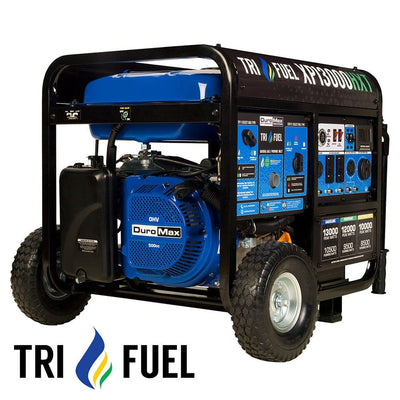
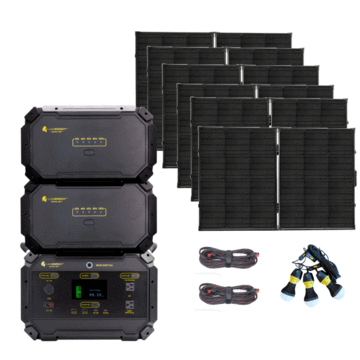
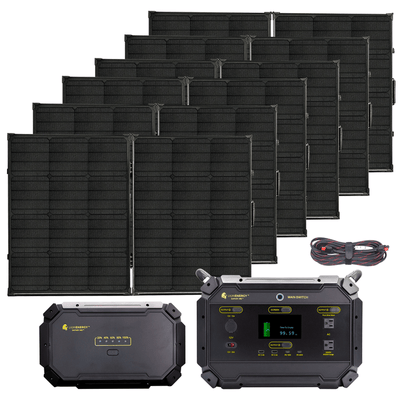
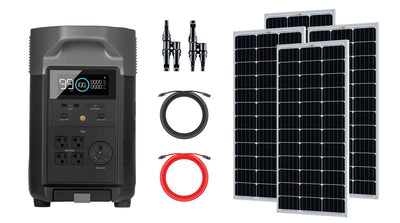
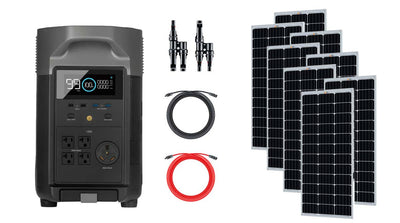
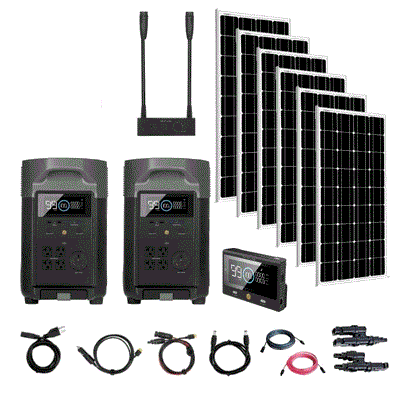
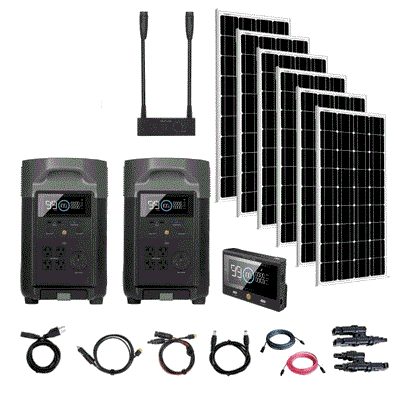
Buyers who want three fuel options instead of two should look at tri-fuel portable generators. The DuroMax XP13000HXT adds natural gas to the gasoline and propane options, which makes sense when a home already has a natural gas line and wants the longest possible fuel access during an extended outage. For completely silent, fuel-free backup, portable solar generators are a separate category with meaningful tradeoffs around wattage, battery capacity, and weather dependence. For a broader comparison, see our guide to the best solar generators for silent, fuel-free backup.
How to make the final call
- List the appliances you need to run simultaneously, find each one's running watts, add them up, then add the starting surge of the largest motor-driven appliance. This total is your minimum running watt requirement on your chosen fuel.
- Decide whether you will run extension cords to individual appliances or connect to household circuits. If circuits, plan for a transfer switch before you choose a model, because the connection method can determine which generator size is appropriate.
- Choose your fuel access based on what you can realistically store or refill where you live. Propane's storage advantage is real if local delivery is reliable and you have tank space. If you depend on gas cans, stock up and rotate them with stabilizer.
- Match the noise level to your situation. A 52 dB inverter at night in a suburban neighborhood is a very different calculation than a 78 dB open-frame unit running for days.
- Confirm current stock and shipping time for the exact model before you order. Freight and parcel shipping for generators of this size and weight requires advance planning, and most manufacturers do not offer next-day delivery.
- Order before the storm. Demand spikes the moment a storm develops in the Atlantic or Gulf, shipping timelines extend with it, and overnight delivery during an active weather event is not a realistic option.
The best dual-fuel generators are the ones that arrive, get set up, and get tested before you need them under pressure. Browse our dual fuel generators collection, confirm the model that matches your load calculation, and get it shipped while the skies are clear. Understanding the benefits of having a generator can help you choose the right backup system for your home.
Frequently asked questions
Are dual-fuel generators worth it for hurricane preparation?
They can be, especially if gasoline becomes difficult to obtain or you want propane for longer-term storage. Keep both fuels available, because propane performance depends on tank size, pressure, temperature, and local supply.
Can I use a dual-fuel generator with a home transfer switch?
Yes, if the generator has the required output, voltage, and connection, but a qualified electrician should install a properly rated transfer switch or listed interlock. Never connect a portable generator to a wall outlet, and confirm the fuel-specific running watts cover the circuits you plan to use.
What should I check before buying a best dual-fuel generator online?
Verify the exact model number, gasoline and propane wattage ratings, propane pressure requirement, warranty, manual, shipping destination restrictions, and current stock status. Product pages and collection pages can differ, so confirm availability for your specific model before ordering.
How early should I order a dual-fuel generator before a storm?
Order and test it well before the forecast becomes urgent, ideally early in hurricane season or as soon as you identify a need. Generator overnight delivery during a storm is generally not available, and freight or parcel delays can occur when demand rises.
← Older Post Newer Post →