 (954) 249-2314
Best Solar Generators for Home Backup in 2026
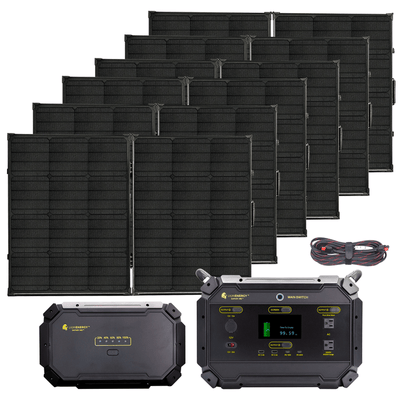
The best solar generators for most U.S. homeowners in 2026 are large-capacity lithium units like the EcoFlow Delta Pro Ultra, Anker Solix F3800 Plus, Jackery 5000 Plus, and Nature's Generator MyGrid 10K, but the right pick shifts quickly depending on which circuits you need to keep running and for how long. At All Pro Generators, we've watched buyers focus on brand names when the load list is really what drives the decision.
What to look for before you buy
A solar generator is a battery system paired with solar panels.
It collects sunlight, stores energy, and delivers it through an inverter when the grid goes down.
No combustion means no carbon monoxide, so you can run one indoors, which is a real advantage over gas, diesel, or propane generators that must always stay outside.
The practical limit is storage: once the battery is depleted, recharge speed depends on panel size, available sunlight, and whether AC or generator charging is available.
A storm that cuts your power is often the worst time to count on fast solar recharging, which is why battery capacity and realistic panel sizing matter more than headline solar-input specs alone.
These are the factors that genuinely change which unit is the best solar generator to buy for your situation.
- Load list first, capacity second. Add up the running watts for everything you want to power: refrigerator (150 to 400W running, up to 1,200W startup), freezer, sump pump (500 to 800W running, up to 1,600W startup), well pump (750 to 1,000W running, up to 2,000W+ startup), lights, router, CPAP, and anything else critical. Match a unit whose continuous output and battery capacity can sustain those loads for your expected outage length.
- Startup surge. Motors and compressors pull two to three times their running wattage at startup. A system with 6,000W continuous output may still stumble on a load that surges well past that at startup. Check surge ratings, not just continuous output.
- 120V versus 240V support. Well pumps, central air conditioners, and some electrical panels require 240V split-phase power. Only units with native or dual-unit 240V output can serve those loads. This is a deciding condition, not a footnote.
- Battery chemistry and cycle life. LiFePO4 (LFP) is now standard in quality home-backup units. Current models rate between 3,000 and 6,000+ cycles to 80% capacity, which translates to a decade or more of regular use.
- Expandability. Some systems scale dramatically. A large expansion ceiling is useful for staged buyers, but don't confuse what a system can eventually become with what it ships as today.
- Solar input versus real weather. A high solar-input spec assumes ideal conditions. In overcast or storm-recovery weather, actual recharge is slower. Size your panel array conservatively and always have AC or generator charging as a fallback.
- Switchover speed. Medical devices, desktop computers, and some refrigerators need a fast cutover when grid power fails. Look for sub-20 ms or 0 ms UPS modes if sensitive equipment is in your load list.
- Safety certifications. For permanent or semi-permanent installs, look for relevant UL listings. The Anker Solix E10, for example, carries UL 9540 and UL 9540A fire-safety certifications for residential energy-storage applications.
- Home integration. Feeding circuits through a panel requires a transfer switch installed by a licensed electrician. Connecting to your breaker panel without one is dangerous and can backfeed utility lines. Plugging appliances directly into the unit avoids that requirement entirely.
- Warranty. Five-year warranties are common on current flagship models. Confirm what the warranty covers because rated cycle life and warranty length are not the same thing.

The strongest options by use case
Whole-home and near-whole-home backup
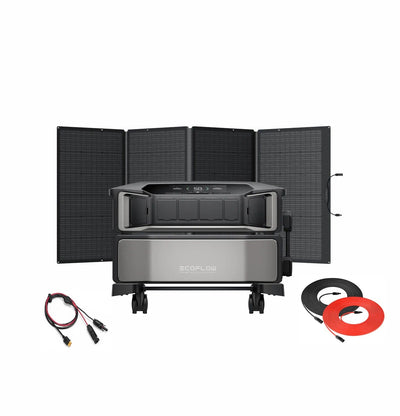
The EcoFlow Delta Pro Ultra is our top pick for buyers who need serious 120/240V home backup today.
Each inverter delivers 7,200W continuous output with a 10.8kW surge, 6,144Wh per battery pack, LFP chemistry rated to 3,500 cycles, and 5,600W solar input per inverter.
The system scales from a single unit to 90kWh and 21.6kW across multiple inverters, making it one of the most expandable solar backup platforms available.
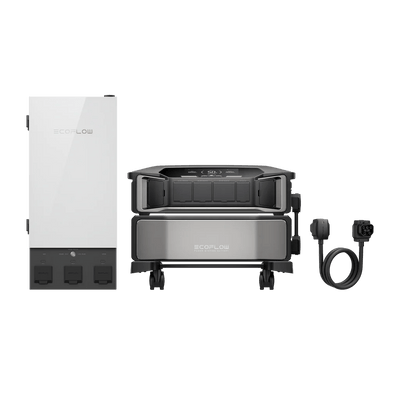
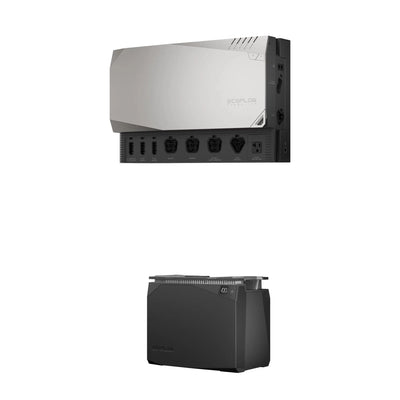
The EcoFlow Delta Pro Ultra X steps up to 12kW continuous 120/240V output with 12kWh in the flagship kit and 10,000W total DC input across two ports, paired with EcoFlow's Smart Home Panel 3 for whole-home circuit management.
The Jackery 5000 Plus competes directly in this tier with 5,040Wh capacity, 7,200W rated output, a 14,400W surge rating, native 120/240V support, and up to 4,000W solar input. It works with a 60A Smart Transfer Switch for up to 12 circuits at 120V or 6 circuits at 240V and scales to 60kWh for buyers with a staged expansion plan.
The Nature's Generator MyGrid 10K carries the highest solar-input ceiling of any unit in this comparison: 10,496Wh capacity, 10,000W continuous output, under-20ms auto switching, and a 12,000W MPPT solar charger. It also supports wind charging alongside solar and AC input, uses LiFePO4 chemistry rated beyond 6,000 cycles, and carries a 5-year warranty. If your site has strong sun exposure and you want to minimize reliance on grid recharging, the MyGrid 10K's panel-absorption ability is a genuine advantage.
Essential-circuit and large portable backup
The Anker Solix F3800 Plus sits in a practical sweet spot for homeowners who want solid 120/240V capability without committing to a full whole-home installation.
It ships with 3,840Wh capacity, 6,000W total AC output, 120/240V L14-30R output, a 20ms UPS mode, LFP cells rated to 3,000+ cycles, and 3,200W dual solar input.
At 136.7 lbs it's a floor-standing unit rather than a carry-anywhere device, but it's well matched to essential-circuit backup covering refrigerator, freezer, sump pump, lights, and medical equipment on a transfer switch.
It expands to 53.8kWh with additional battery packs.
The Anker Solix F3800 offers the same 120/240V split-phase output and 6,000W continuous power with 2,400W solar input and a similar expansion path.
For Nature's Generator solar generators in this range, the Nature's Generator Powerhouse delivers 7,200W split-phase 120/240V output and 4,800Wh base capacity with expansion through Power Pods, plus AC, solar, and wind charging support. The Nature's Generator Lithium 6000 and Lithium 3600 give buyers a scalable path: two Lithium 3600 units can combine for up to 7,200W and 240V output, useful when you want to start smaller and expand later.
Portable emergency and moderate backup
Not every buyer needs whole-home scale.
For a cabin, apartment, or short-term outage coverage, the 2,000 to 3,600Wh class does the job.
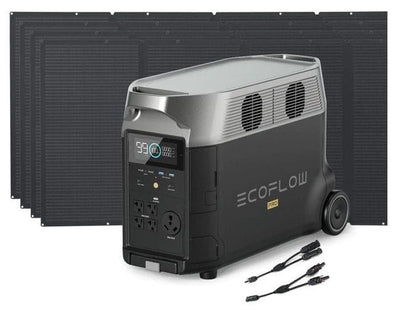
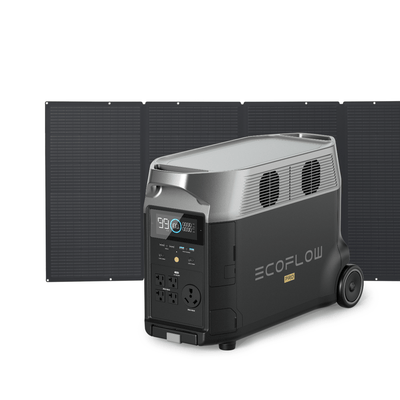
The EcoFlow Delta Pro 3 at 4,000W output with dual 120V/240V capability handles high-demand single appliances like a 3-ton AC unit or a 1-hp water pump without requiring a full home-backup installation.
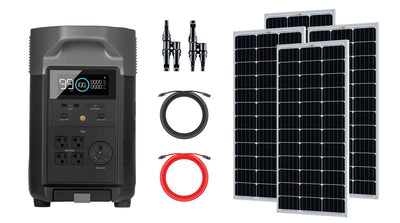
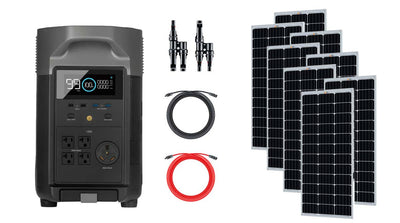
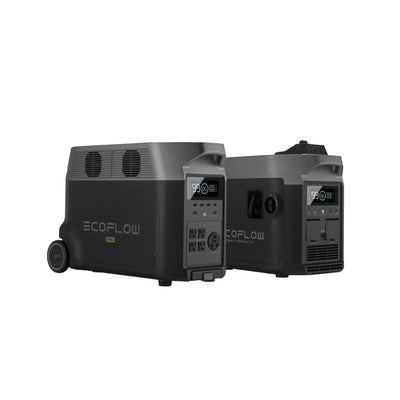
The EcoFlow Delta Pro starts at 3.6kWh and 3,600W output and expands to 25kWh through its battery and smart generator ecosystem.
The EcoFlow Delta 2 Max steps down to 2,048Wh and 2,400W output with LFP cells and a 20ms UPS, making it a strong pick for phones, router, lights, refrigerator, and CPAP during shorter outages.
The Jackery HP3600 Plus at 3,584Wh and the Jackery Explorer 2000 Plus at approximately 2,042Wh fill similar roles with LFP chemistry and good solar compatibility. The Nature's Generator Lithium 1800 is a capable starting point in this range that pairs with solar and wind accessories and grows through additional units. Secondary brands including Bluetti, Pecron, and Oscal round out our lineup for value-focused buyers: Bluetti's AC500 with B300S battery modules supports up to 18,432Wh and 240V capability across two units, while Pecron's E3600LFP and Oscal's PowerMax 3600 are practical LFP options for moderate loads at a lower entry price.
How the leading models compare
| Model | Battery Capacity | Continuous Output | 120/240V | Max Solar Input | Expandable To | Cycle Rating |
|---|---|---|---|---|---|---|
| EcoFlow Delta Pro Ultra | 6,144Wh per unit | 7,200W | Yes | 5,600W per inverter | 90kWh / 21.6kW | 3,500 cycles to 80% |
| EcoFlow Delta Pro Ultra X | 12kWh (kit) | 12,000W | Yes | 10,000W total DC | System-level | LFP / 5-yr warranty |
| Jackery 5000 Plus | 5,040Wh | 7,200W | Yes | 4,000W | 60kWh | LFP chemistry |
| Nature's Generator MyGrid 10K | 10,496Wh | 10,000W | Yes (208/240V) | 12,000W MPPT | Battery expansion | 6,000+ cycles |
| Anker Solix F3800 Plus | 3,840Wh | 6,000W | Yes | 3,200W | 53.8kWh | 3,000+ cycles to 80% |
| Anker Solix F3800 | 3,840Wh | 6,000W | Yes | 2,400W | 53.8kWh (dual unit) | LFP chemistry |
| Nature's Generator Powerhouse | 4,800Wh base | 7,200W split-phase | Yes | AC/solar/wind | Power Pod expansion | LFP chemistry |
| EcoFlow Delta Pro 3 | Varies by config | 4,000W | Yes (dual mode) | Listed by config | Ecosystem expansion | LFP chemistry |
| EcoFlow Delta 2 Max | 2,048Wh | 2,400W | 120V native | 1,000W | 6,144Wh | 3,000 cycles to 80% |
| Jackery HP3600 Plus | 3,584Wh | Listed by config | 120V bypass | 1,000W | Expansion batteries | 6,000 cycles to 70% |
| Anker Solix F3000 | 3,072Wh | 4,000W | 240V via dual unit | Listed by config | Battery expansion | 4,000 cycles to 80% |
Units that deliver 240V from a single portable system include the Delta Pro Ultra, Delta Pro Ultra X, Jackery 5000 Plus, Anker F3800, Anker F3800 Plus, and MyGrid 10K. Every other model in the table either requires pairing two units or operates at 120V only. That distinction separates a good solar generator for whole-home circuit backup from one better suited to essential-circuit or portable duty.
Storm prep and when fuel generators make more sense
Solar generators are quiet, emission-free at the point of use, and safe to run indoors.
For outages lasting a few hours to a few days with a well-sized battery and solar array, they work extremely well.
The honest trade-off appears during multi-day hurricane outages with heavy cloud cover, which limits solar recharging exactly when you need power most.
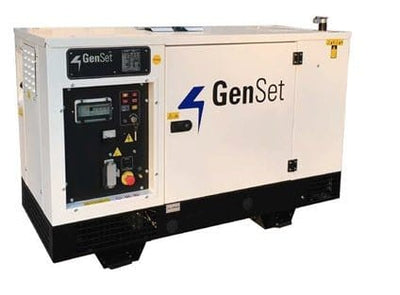
Very high continuous loads, industrial duty cycles, marine prime power, or whole-home HVAC backup for a large home may point toward diesel, dual-fuel, or standby generators instead.
Some homeowners use a hybrid approach: the battery system runs silently at night while a gas or dual-fuel generator recharges it during daylight hours. For longer outages, compare this setup with the best dual fuel generators when fuel availability and extended runtime matter most. For longer outages, compare battery systems with the best tri fuel generators to find a flexible backup setup. For longer outages, compare the best propane generators as a practical fuel-based backup option. Compare the best gas generators if you need dependable fuel-powered backup for extended outages.
We carry diesel, dual-fuel, and tri-fuel options alongside our solar lineup for buyers whose load or outage scenarios push past what battery storage handles comfortably.
Atlantic hurricane season runs June 1 through November 30, with peak activity typically between mid-August and mid-October.
Order volume surges when storms develop, but that's the worst time to start shopping.
Overnight shipping for a large generator is generally not possible, and when it is, the cost can approach or exceed the price of the generator itself.
Order early, have a licensed electrician connect any transfer switch, test the system, and arrive at storm season with a full charge.
Cloudy weather meaningfully slows solar recharging, so a full battery before the outage starts is a plan, not an assumption.

How to choose the right model
- Build your load list. Write down every device you want to keep running during an outage, note its running wattage and startup wattage from the nameplate or manufacturer spec, and total them up. This number determines your minimum output and capacity requirements before brand or price enters the picture.
- Decide on 120V or 240V. If your critical loads include a well pump, central air conditioner, or any 240V appliance, confirm the unit delivers native split-phase 240V output. Eliminate any model that doesn't meet this requirement before comparing anything else.
- Choose a capacity tier. Essentials-only coverage fits well in the 2,000 to 4,000Wh range. Adding a sump pump and window AC unit calls for 4,000 to 6,000Wh or more. Near-whole-home or heavy-load backup needs 6,000Wh and above with expandability planned from the start.
- Confirm your surge headroom. Your chosen unit's surge rating must handle the highest single-motor startup in your load list, not just the running total. Check this spec on the product page before buying.
- Plan your recharge path. Size your solar panels generously and factor in local weather. Confirm the unit also supports AC wall charging or generator charging so you're not dependent on sunlight alone during storm recovery.
- Account for transfer switch needs. If you're connecting to a circuit-breaker panel rather than plugging appliances directly into the unit, a transfer switch or interlock installed by a licensed electrician is required. Factor installation cost and lead time into your purchase plan before storm season arrives.
- Talk to our team if you're unsure. Our USA-based specialists can match a model to your actual load list, home setup, and outage expectations. Getting this right before ordering is far easier than returning a unit after a storm.
The best solar power generator is the one sized to your real loads, paired with a recharge plan that works in your local weather, and tested before you need it. If you are comparing fuel-powered options as well, our guide to the best generators is a useful adjacent resource.
For most homeowners, the EcoFlow Delta Pro Ultra, Anker Solix F3800 Plus, and Jackery 5000 Plus are the strongest starting points this year.
If solar recharge capacity is the priority, the Nature's Generator MyGrid 10K leads on that spec.
For portable emergency coverage, the EcoFlow Delta 2 Max, Jackery Explorer 2000 Plus, and Nature's Generator Lithium 1800 and 3600 are practical, well-built choices.
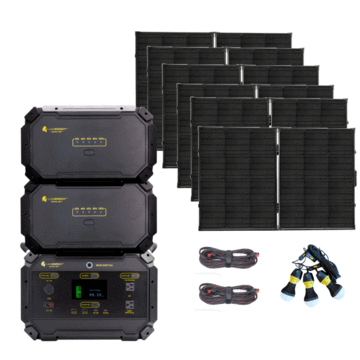
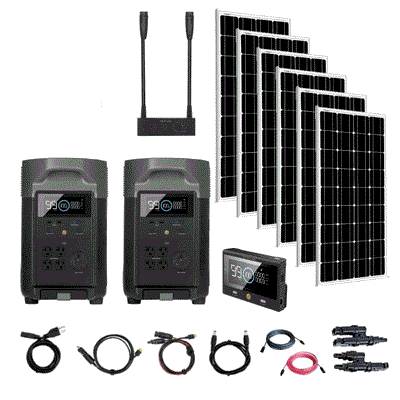
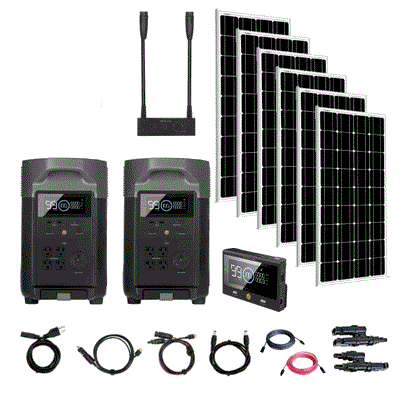
Browse our solar generators and home backup solar kits to see what's in stock, or reach out and we'll help you find the right fit.
Frequently asked questions
How long will the best solar generator run my refrigerator?
Runtime depends on the refrigerator’s actual wattage, startup surge, battery capacity, and inverter losses. Check the appliance label, then use the unit’s usable watt-hours rather than its advertised battery size for a more realistic estimate.
Can I use a solar generator to power my whole house?
Yes, but only systems with sufficient capacity, 120/240V output, and approved home-integration equipment are suitable for whole-home or panel backup. A qualified electrician should install the transfer switch or interlock to prevent utility backfeeding.
Will solar panels recharge a generator during a hurricane?
They may recharge it, but clouds, rain, shading, and shorter daylight can reduce output substantially. Size the battery for expected low-sun conditions and treat the generator’s maximum solar-input rating as a ceiling, not a guaranteed charging speed.
Is a solar generator better than a gas generator for a long outage?
A solar generator is usually better for quiet, indoor-safe essential backup without fuel storage or exhaust. For several days of heavy loads, electric heating, central air conditioning, or limited sunlight, a fuel or hybrid system may provide more practical continuous power.
← Older Post Newer Post →