 (954) 249-2314
Best Generators for Home, Off-Grid, Business, and Marine Power
Which are the best generators? At All Pro Generators, that question shapes every conversation we have with buyers before storm season or a major project. The honest answer is that the strongest choice depends on your loads, your fuel, and your situation, but the decision is far more manageable than it looks once you know what to compare.
What actually makes a generator good
Most shoppers start with wattage, and wattage matters, but it is only part of the picture.
Every generator has two numbers: running watts, which is continuous output, and starting watts, which is the brief surge it can handle when a motor kicks on.
A 2-ton central air conditioner can demand 3,500 to 4,500 watts at startup alone, before you add the refrigerator, lights, or anything else.
Sizing around running watts only is one of the most common and costly mistakes we see.
- Running and starting wattage: motor loads like pumps, compressors, and HVAC systems surge hard at startup and determine whether the unit keeps up
- Fuel type and local availability: gasoline, propane, diesel, natural gas, and solar-charged batteries each have different storage, maintenance, and outage-supply realities
- Runtime and refueling demands: how long does it run on a full tank or full charge, and can you sustain that fuel supply during an extended outage
- Noise level: conventional open-frame gas units are loud; inverter-style generators and battery-based solar systems are dramatically quieter
- Transfer switch compatibility: safely connecting to your home's circuits requires a transfer switch or interlock, not extension cords
- Installation requirements: standby systems need permanent installation and typically a licensed electrician
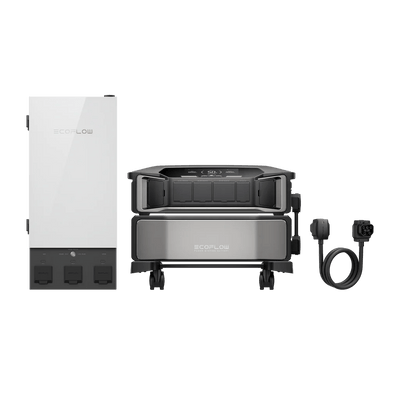
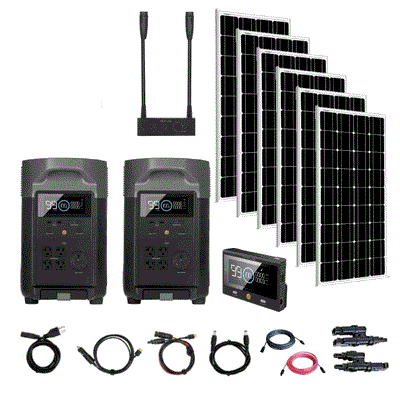
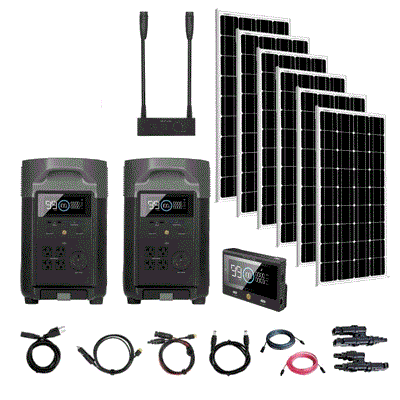
- Expandability: battery-based systems like the EcoFlow Delta Pro Ultra and Nature's Generator MyGrid 10K can grow capacity with additional modules
- Safety features: CO shutoff technology is a meaningful differentiator for any fuel-burning portable generator used near living spaces
- Warranty and service access: warranty length, service region, and whether support is genuinely reachable all affect long-term value
Solar generators and portable power stations
Solar generators and large portable power stations are the right answer for quiet, indoor-friendly, expandable backup. They produce no carbon monoxide, run silently overnight, and charge from solar panels or the grid. Their honest limitation is stored energy capacity and solar recharge conditions during extended outages with poor sun.
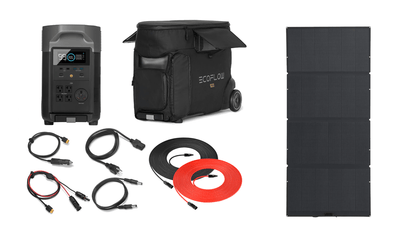
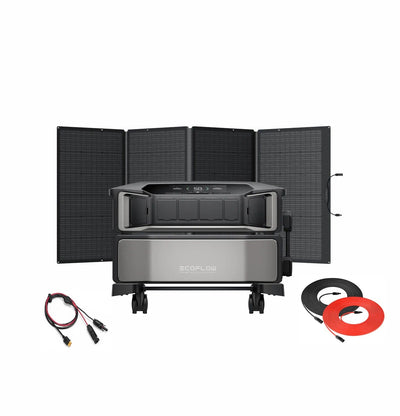
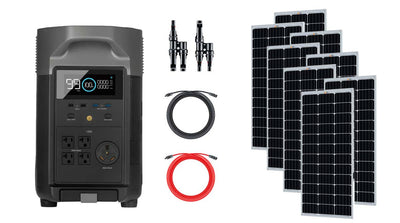
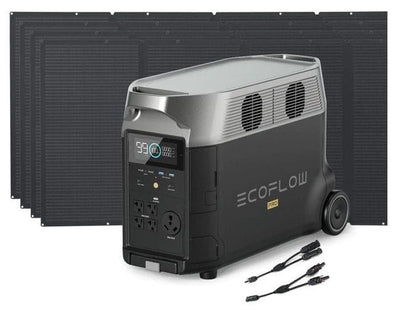
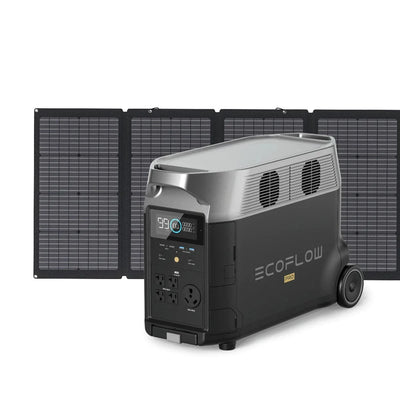
The EcoFlow Delta Pro Ultra delivers 7,200W continuous AC output per inverter and up to 5.6kW of solar input.
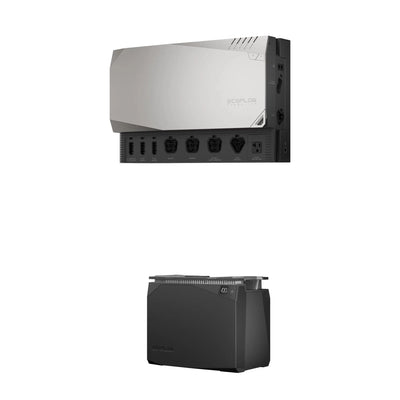
The more powerful EcoFlow Delta Pro Ultra X steps that up to 12,000W output and 10kW of PV input per inverter, with whole-home integration through a 120/240V 50A connection.
These are serious whole-home solar backup platforms.
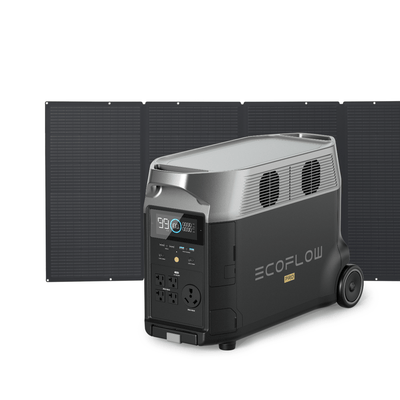
The EcoFlow Delta Pro 3 sits at 4,000W rated output with X-Boost reaching 6,000W and expandable capacity up to 48kWh, making it a capable mid-tier option.
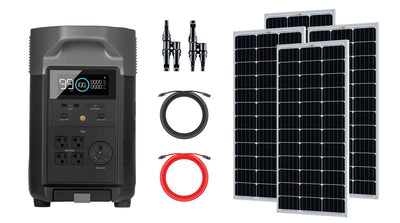
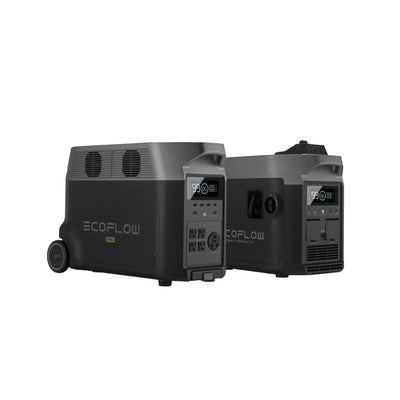
The original EcoFlow Delta Pro offers 3,600W output, 3,600Wh of LFP battery, and 3,500 cycles to 80 percent or better.
EcoFlow is one of the most recognized names in the solar generator category, though warranty service is U.S.-region-specific, which is worth knowing before you buy.
The Anker Solix F3800 carries 3,840Wh and accepts up to 1,200W of solar input per port.
The Anker SOLIX F3800 Plus supports up to 3,200W of solar input (3,300W maximum solar charging for a single unit) thanks to its dual 165V MPPT inputs. When paired with one or more expansion batteries, its AC/generator charging capability increases to up to 6,000W, but its maximum solar input remains 3,200W.
For whole-home scale, the Anker Solix E10 delivers 7,680W continuous output, a 10,000W turbo mode for 90 minutes with two batteries, an IP66 outdoor enclosure, and a 5-year warranty.
The Anker Solix 3000 offers 3,072Wh LFP capacity, 3,600W continuous 120V output, and expandability up to 12,288Wh with three expansion batteries.
Nature's Generator has been in the solar generator space longer than most brands.
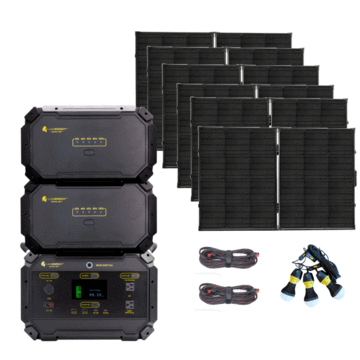
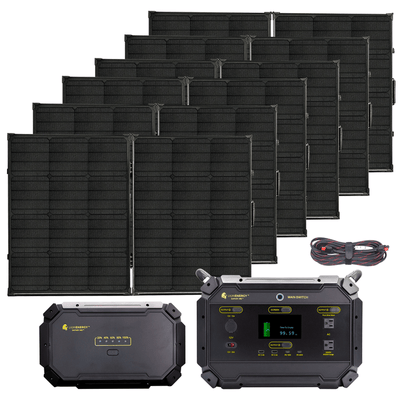
The Nature's Generator MyGrid 10K is a standout for whole-home solar backup: 10,000W continuous, 20,000W peak, 10,496Wh of LFP battery, expandability to 73.4kWh, and 12,000W of solar charging with less than 20ms auto switching.
The Nature's Generator Lithium 3600 delivers 3,600W continuous with 3,072Wh of capacity.
The Nature's Generator Lithium 1800 can be paired with a second unit or connected to solar panels or a wind turbine to extend runtime for smaller essential loads.
Jackery rounds out the solar generator category with approachable, well-built portable options.
The Jackery 5000 Plus and Jackery HP3600 Plus are strong buys for users who want reliable portable solar backup without heavy installation.
The Jackery HomePower 3600 Plus carries 3,584Wh of LiFePO4 capacity and is rated for 6,000 cycles to 70 percent, which translates to years of regular use.
The smaller Jackery Explorer 2000 and Jackery 3000 work well for anyone powering essentials rather than whole-home loads.

Diesel, standby, and multi-fuel generators
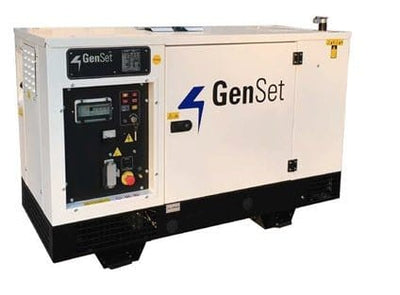
Diesel belongs in the conversation when continuous runtime, commercial loads, or sustained off-grid operation matter more than portability or quiet. A diesel generator for home or business use can run for extended periods on a single tank, handles steady loads well, and does not carry the same fuel-stabilizer maintenance concerns as gasoline. The tradeoff is noise, exhaust, and the commitment to maintaining a diesel supply and the engine itself. For portable generators, the CPSC Releases New Report on Carbon Monoxide Fatalities, Urges Generator Safety advises operating them outdoors at least 20 feet from the house, directing exhaust away from the home and other buildings, and recognizing that opening doors or windows is not enough to prevent lethal carbon monoxide buildup.
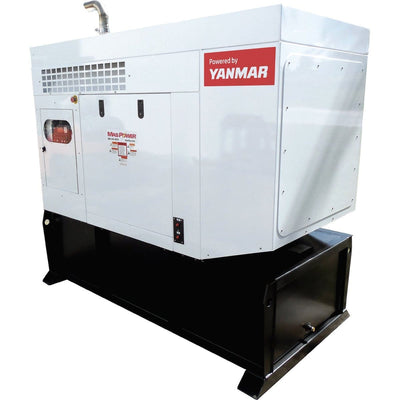
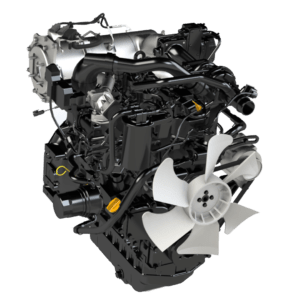
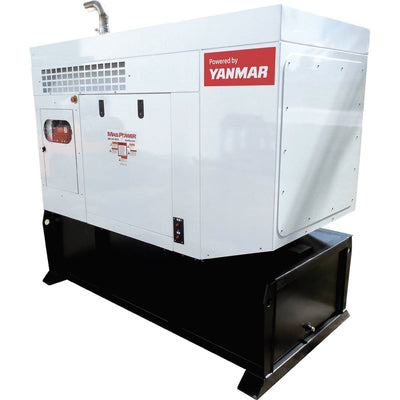
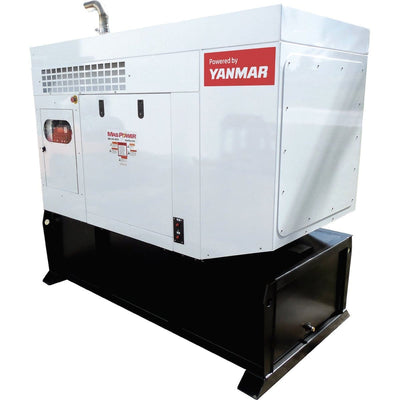
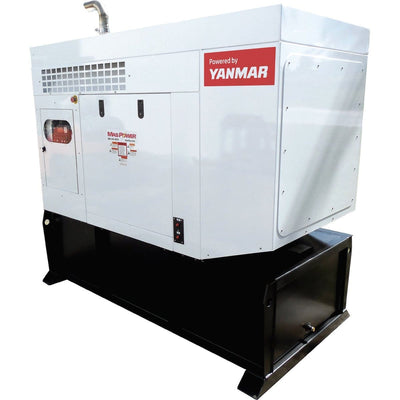
Yanmar diesel generators are built around direct-injection air-cooled engines engineered for durability and long operation. The YDG series includes the YDG3700N at 3.5 kVA continuous and the YDG5500N at 5.0 kVA continuous, both compact and mobile units well-suited to field, worksite, and off-grid utility loads. Yanmar's Japanese-made engines and reputation for longevity make the brand a credible choice when engine life is a genuine priority.
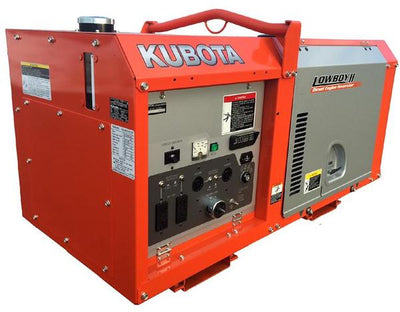
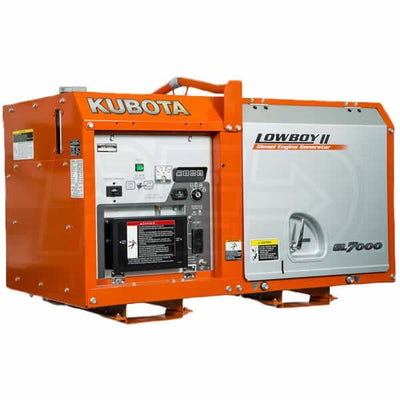
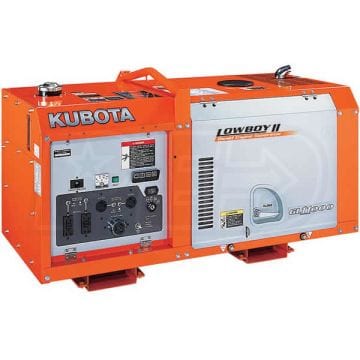
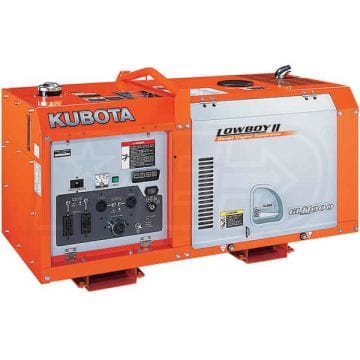
The Kubota GL14000 LowboyPro Industrial Diesel Generator is rated at 12 kVA continuous and 14 kVA maximum, with a 9.62-gallon tank that runs up to 15 hours at 25 percent load. It carries an EPA Tier 4 Final engine and a full suite of safety shutdowns covering low oil pressure, excessive coolant temperature, over-revolution, and overcurrent, plus 82 liters of spill containment. That engineering reflects a machine built for serious, sustained applications.
Cummins spans residential to commercial standby power.
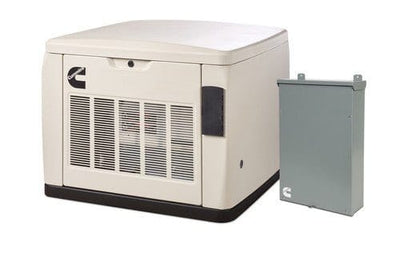
The QuietConnect home standby series runs on natural gas or propane, claims 65 dB or lower noise, and includes remote diagnostics and load management.
Cummins backs its 13 to 20 kW QuietConnect models with a 5-year or 2,000-hour limited warranty, and many popular residential units are manufactured in the United States.
The Cummins Onan P9500DF EFI is a dual-fuel portable on gasoline or propane, built around Cummins Onan's own EFI engine for home backup and jobsite use.
For storm preparation, portable multi-fuel generators remain one of the most practical tools available.
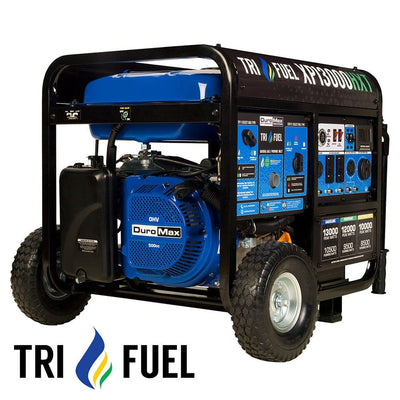
The Duromax XP13000HXT Tri-Fuel Generator runs on gasoline, propane, or natural gas with 13,000 peak watts, a CO alert shutdown, GFCI outlets, and electric start in one portable unit.
When one fuel source is unavailable, that flexibility is a real advantage.
The Duromax XP13000HX Dual Fuel Generator covers gasoline and propane at 13,000 peak watts and 10,500 running watts on gasoline.
Duromax generators are engineered and designed in the USA.
How the generator types compare
| Type | Best for | Fuel | Noise | Installation | Approximate cost range |
|---|---|---|---|---|---|
| Solar generator / power station | Quiet home backup, off-grid, expandable storage | Solar + grid charge | Very low | None (plug-in) | $500, $10,000+ |
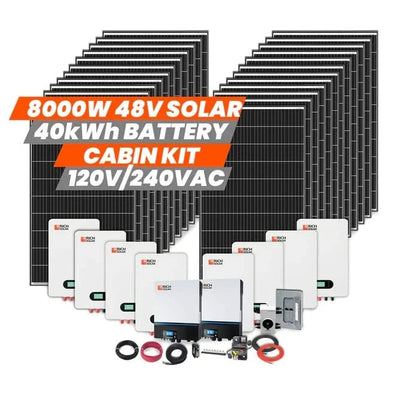
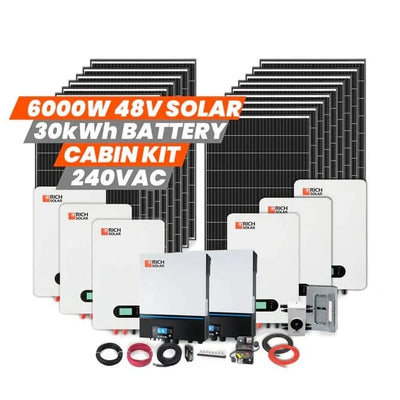
| Home backup solar kit | Whole-home solar backup with auto-switching | Solar + grid charge | Very low | Moderate to high | $3,000, $20,000+ |
| Home standby generator | Automatic whole-home coverage | Natural gas / propane | Low to moderate | High (licensed install) | $3,700+ before install |
| Portable gas generator | Storm prep, job sites, temporary backup | Gasoline | Loud | None (outdoor use) | $300, $1,500 |
| Dual-fuel generator | Storm prep with fuel flexibility | Gasoline + propane | Loud | None (outdoor use) | $600, $2,500 |
| Tri-fuel generator | Maximum fuel flexibility during outages | Gas + propane + natural gas | Loud | None (outdoor use) | $900, $3,000 |
| Portable diesel generator | Sustained commercial or field power | Diesel | Moderate | None to low | $1,000, $5,000 |
| Industrial diesel generator | Heavy commercial, off-grid, long runtime | Diesel | Moderate | Site prep required | $5,000+ |
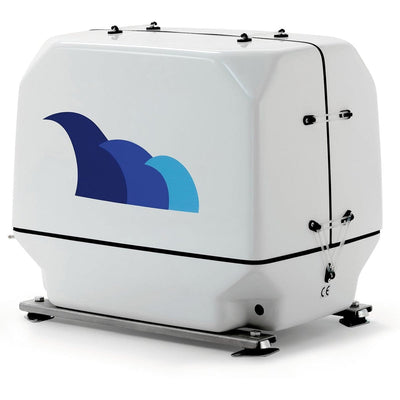
| Marine generator | Onboard boat power | Diesel | Low (silenced) | Boat-specific install | $3,000+ |
| Inverter generator | Sensitive electronics, quiet portable use | Gasoline | Low to moderate | None (outdoor use) | $400, $2,000 |
Solar and battery systems cost more upfront but can provide year-round value by storing solar or lower-cost grid power, while fuel generators deliver value mainly during outages. For residential battery installations, UL Solutions explains that systems are generally required under IRC and NFPA 855 installation codes to be certified to UL 9540, while UL 9540A evaluates thermal-runaway fire-propagation behavior Q&A: Marking on Energy Storage Systems for Residential Use - UL Solutions. For most homeowners, the decision comes down to how long their typical outage lasts, whether sun or fuel supply can sustain it, and how much noise their situation can tolerate. Understanding the benefits of having a generator can help you weigh outage duration, fuel availability, and noise against the upfront cost.
A solar-plus-fuel hybrid approach also works well for extended storm prep: a large battery system handles overnight loads silently, while a dual-fuel or tri-fuel portable extends runtime when solar recharge cannot keep up.
Boat owners need to evaluate marine generators separately from household units.
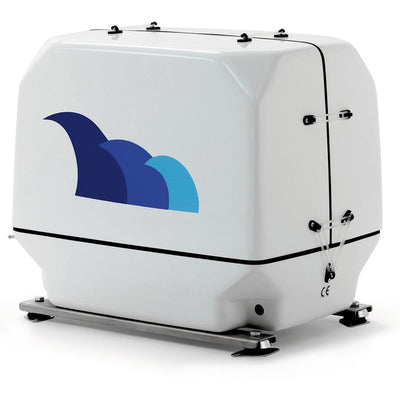
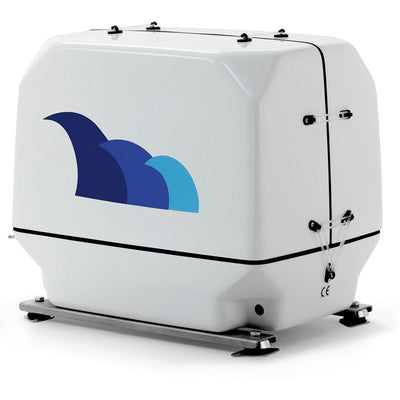
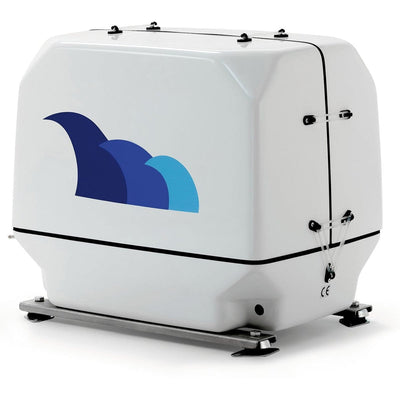
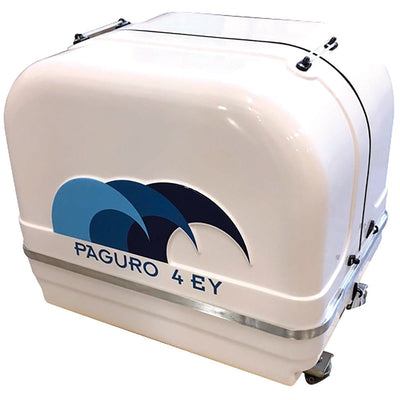
The MASE IS 5.0 is a 5 kW single-phase diesel marine genset built with a soundproof marine aluminum cabin, double vibration damping, low oil pressure and high engine temperature alarms, and an emergency stop button as standard. Paguro marine generators cover a similar use case with compact diesel designs for varying vessel load requirements.
Carbon monoxide aboard a boat is a fast-moving risk, and marine-qualified equipment with a marine-rated CO detector are not optional extras.
Business owners, institutions, and government buyers who need prime or continuous power rather than backup should start with Cummins or Kubota diesel systems.
How to choose: a practical decision path
- List your critical loads first: write down what must stay on during an outage, estimate running watts for each, identify the one with the highest starting surge, and add them together. That total, with surge headroom, is your minimum generator capacity.
- Decide on your fuel reality: natural gas service points toward a dual-fuel, tri-fuel, or standby unit; a propane supply favors propane-capable models; diesel storage and maintenance being acceptable opens up Yanmar, Kubota, and Cummins diesel options; wanting no fuel at all means a solar generator or home backup solar kit is the right direction.
- Match the generator type to your situation: solar and battery systems for quiet, expandable, indoor-friendly backup; portable gas or multi-fuel generators for affordable storm prep; home standby generators for automatic whole-home coverage; diesel generators for commercial, sustained, or off-grid loads; marine generators for any onboard boat application.
- Plan for safe connection from the start: if you are connecting to home circuits, budget for a transfer switch or interlock installed by a licensed electrician. Treat this as part of the cost, not an optional add-on. The Consumer Product Safety Commission recommends operating portable fuel generators outdoors only, at least 20 feet from the house, with exhaust directed away from structures, and choosing models with automatic CO shutoff.
- Order before the storm: large generators, solar kits, and whole-home battery systems ship by freight and cannot be sent overnight even at premium cost. During hurricane season, which runs June 1 through November 30, demand rises fast when a storm develops in the Atlantic. We process orders daily and move them as quickly as any retailer, but freight shipping timelines are real. Buy before the pressure arrives.

The top rated generators earn that description by matching the load, the fuel supply, the installation plan, and the support reality behind the sale.
A highest rated generator on paper that is consistently undersized, improperly connected, or left unserviced will underperform a simpler machine matched well to the job.
Reliability also comes down to knowing the warranty terms and service region before you buy, not after something goes wrong. Because recalls can affect even major brands, check the CPSC’s Portable Generators Recalls - CPSC database using the exact model before buying.
Our catalog covers the full range, from EcoFlow, Anker Solix, Nature's Generator, and Jackery solar systems to Yanmar, Kubota, and Cummins diesel generators to Duromax and Cummins Onan multi-fuel portables and MASE and Paguro marine generators.
If you want to talk through the specifics for your home, business, or boat, our USA-based team is the right starting point.
Frequently asked questions
What size generator is best for a refrigerator and sump pump?
Size it using both running watts and starting watts, then verify the pump’s nameplate or measured startup demand. Motors can briefly draw far more power than they use continuously, so an essentials-only load calculation is safer than choosing by appliance wattage alone.
Are solar generators a good choice for long power outages?
They work well for quiet, indoor-friendly essentials, but battery capacity and cloudy-weather recharge can limit extended whole-home backup. A solar generator paired with a fuel generator can provide quiet overnight power while preserving fuel for longer outages.
How can I compare generator reliability between brands?
Check the exact model’s recall history, warranty terms, replacement-part support, and service availability rather than relying on a brand-wide reputation. Complaint totals can reveal support concerns, but they do not prove that every product from a brand is unreliable.
What should I check before ordering a generator during storm season?
Confirm the exact model, fuel type, delivery method, installation needs, and return requirements before placing the order. Large generators and battery systems may require freight or ground handling, so ordering before hurricane threats develop is much safer than depending on overnight delivery.
← Older Post Newer Post →